
What Is the Most Effective Social Media Marketing in China?
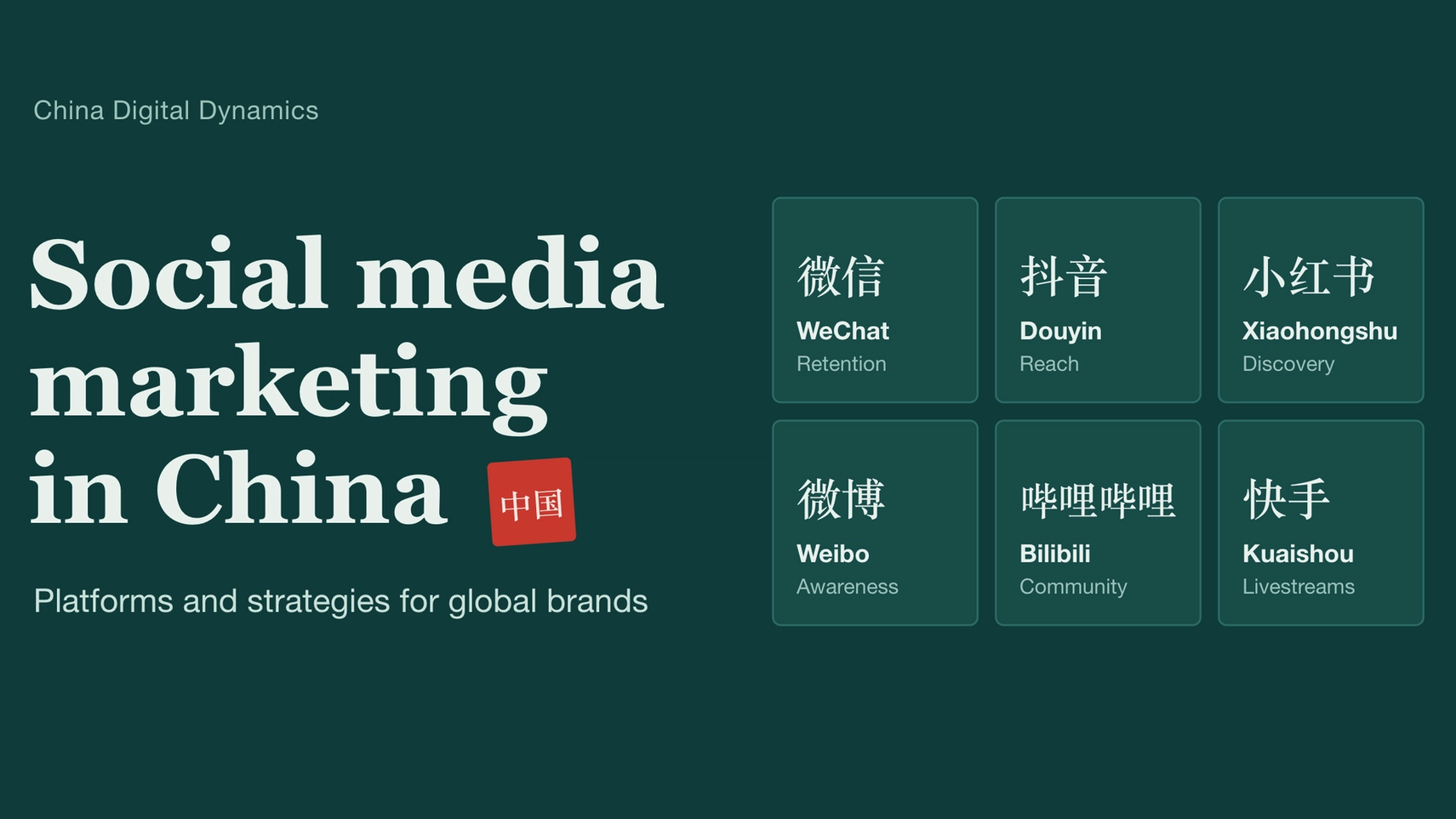
The most effective social media marketing in China is a localized, platform-specific strategy. Choose the one or two platforms where your audience already searches and buys, publish Chinese-native content, partner with trusted creators, and connect every post to social commerce. No single platform wins for every brand: WeChat, Douyin, Xiaohongshu, Weibo, Bilibili and Kuaishou each do a different job in the customer journey.
China’s social ecosystem is closed. Facebook, Instagram and YouTube are not accessible in mainland China, so a Western playbook does not transfer. Social media also works best as one part of a wider China market entry strategy that covers search, PR and commerce.
How Is Social Media Marketing in China Different From the West?
How China’s social media ecosystem works
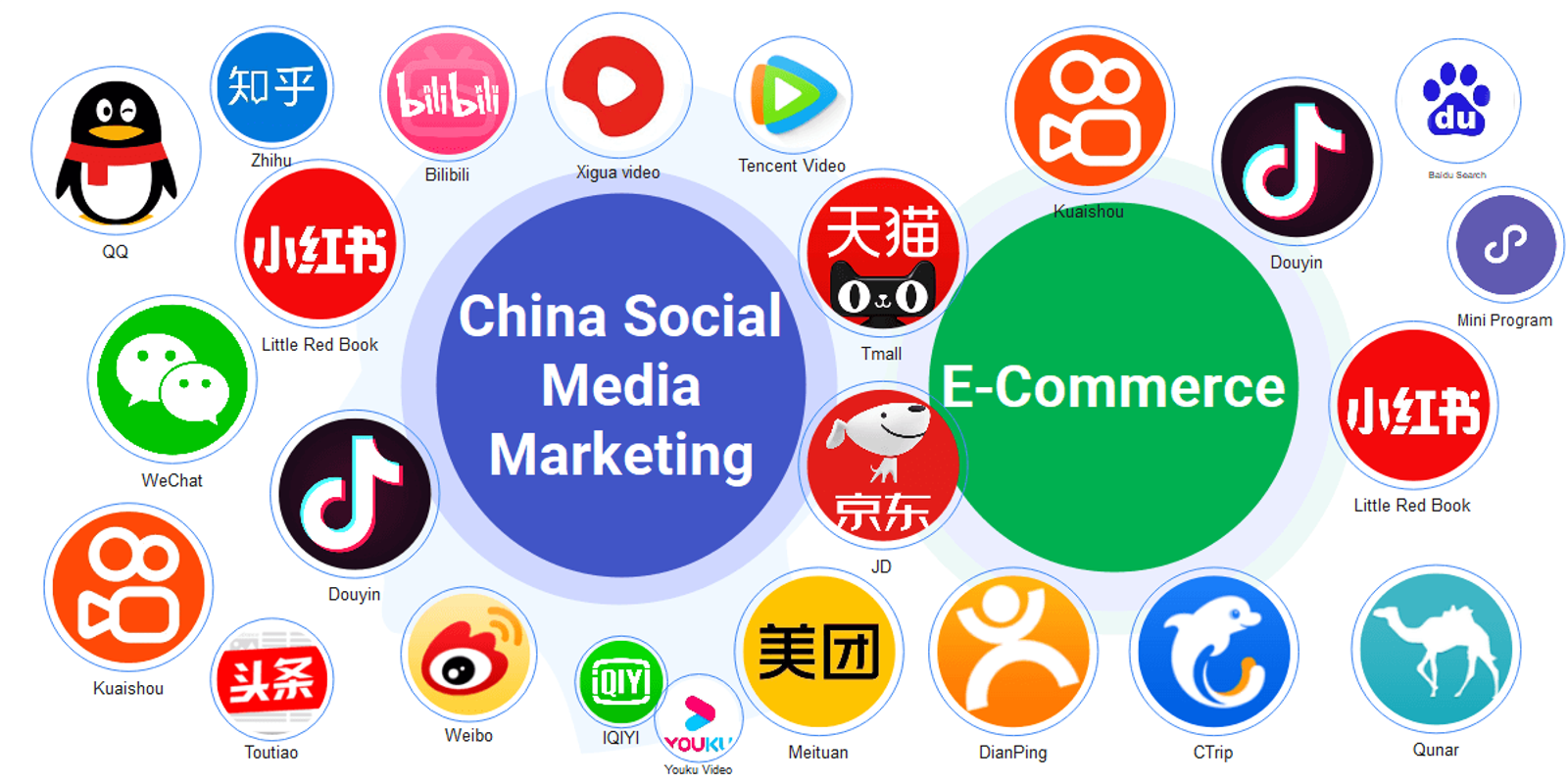
China’s major platforms are run by a small group of domestic tech companies: Tencent (WeChat), ByteDance (Douyin), Kuaishou, Sina (Weibo) and Bilibili, plus independent Xiaohongshu. Each runs its own algorithm, ad system, creator ecosystem and commerce tools, so skills and assets do not carry over from one platform to the next.
Super-apps, social commerce, and mobile-first behavior
Chinese users rarely leave the app to buy. On WeChat, messaging, payments, Official Accounts and Mini Programs sit in one place. On Douyin and Xiaohongshu, users discover a product, read reviews and purchase inside the same feed. Everything is built for mobile.
Why local platforms and consumer trust matter
Chinese consumers lean on peer reviews and creator recommendations more than on brand advertising. Trust is earned through useful content, consistent presence and credible third-party voices, which is why localization and community management matter as much as media spend.
What Are the Best Social Media Platforms for Marketing in China?
- WeChat (微信) is best for customer relationships, private traffic and service. Tencent reported 1.439 billion combined Weixin and WeChat monthly active users in June 2026.
- Douyin (抖音) is best for short video, livestream commerce and reach. QuestMobile measured about 1.01 billion monthly active users in March 2026.
- Xiaohongshu / RED (小红书) is best for product discovery, reviews and lifestyle content. QuestMobile estimated about 245 million monthly active users in March 2026.
- Weibo (微博) is best for public conversation, launches and awareness. It reported 561 million monthly active users and 254 million daily active users in June 2026.
- Bilibili (哔哩哔哩) is best for younger audiences, gaming and tech. It reported 371 million monthly active users and 116.5 million daily active users in Q2 2026.
- Kuaishou (快手) is best for livestream commerce and lower-tier cities. It reported 412.3 million average daily active users and 797.3 million monthly active users in Q2 2026.
Figures come from different sources and methods, so compare them as scale indicators, not exact rankings. Tencent reports Weixin (mainland) and WeChat (international) as one combined number. Xiaohongshu does not publish audited MAU, and third-party estimates vary.
WeChat (微信) for customer relationships and private traffic
WeChat is the owned-channel backbone. Brands use Official Accounts for content and service, Mini Programs for shopping and loyalty, and groups and private chats for CRM. It converts and retains better than it acquires, so pair it with a discovery platform.
Douyin (抖音) for short-form video and social commerce
Douyin is China’s largest short-video platform and a core livestream-commerce channel. It suits product demonstrations, entertainment-led storytelling and fast awareness at scale.
Xiaohongshu / RED (小红书) for product discovery and recommendations
Users search Xiaohongshu the way Western users search Google or Reddit before buying. Notes, reviews and “seeding” by KOCs shape purchase decisions, especially in beauty, fashion, travel, food and lifestyle.
Weibo (微博) for public discussions and brand awareness
Weibo is the public square: trending topics, celebrity and news conversation. Use it for launches, announcements, PR moments and real-time brand response.
Bilibili (哔哩哔哩) for video content and younger audiences
Bilibili’s audience skews young and community-driven, with users spending an average of 113 minutes a day on the platform in Q2 2026. Long-form, informative or entertaining content performs well for gaming, tech, education and anime-adjacent brands.
Kuaishou (快手) for short videos and livestream commerce
Kuaishou has a very large user base with strong reach outside tier-one cities. It is built around authentic creator-to-audience relationships and livestream selling.
What Is the Most Effective Social Media Strategy in China?
Choose platforms based on your target audience
Start where your audience already searches and buys, not where the platform is biggest. A skincare brand and a B2B software firm should not launch on the same channels.
Localize content for Chinese consumers
Localization means more than translation. Rework tone, visuals, humor, holidays, payment and delivery expectations, and use Simplified Chinese written by native speakers.
Partner with Chinese influencers and key opinion leaders (KOLs)
KOLs build reach and credibility; KOCs (key opinion consumers) add peer-level trust and volume. The strongest programs combine both. See this guide to KOL and KOC marketing for international brands, or review our KOL and influencer marketing services if you need help with vetting and execution.
Use short videos and livestreams to demonstrate products
Video and livestreams show the product in use, answer questions in real time and shorten the path from interest to purchase. Authentic, creator-led formats usually beat polished brand ads.
Combine content marketing with social commerce
Every content piece should lead somewhere measurable: a Mini Program, a store, a livestream or a lead form.
Build long-term relationships through community engagement
Reply to comments, run groups, and work with creators over months, not single posts. Repeated, genuine presence is what turns followers into customers.
Which Chinese Social Media Platform Is Right for Your Business?
Best platforms for e-commerce and consumer brands
Douyin and Xiaohongshu for discovery and conversion, WeChat for retention and service, Kuaishou when you want lower-tier-city reach.
Best platforms for B2B companies
WeChat Official Accounts and groups for thought leadership and lead nurturing, supported by Weibo for PR and search visibility through Baidu. B2B buyers research heavily before contact, so authoritative content matters more than viral reach.
Best platforms for beauty, fashion, and lifestyle brands
Xiaohongshu first, then Douyin for demonstration and livestreams, with WeChat Mini Programs for repeat purchase.
Best platforms for gaming, entertainment, and technology
Bilibili, Douyin and Weibo lead for community, trailers and launches. For market context, read our overview of gaming trends in Asia, and if your product is in immersive tech, our analysis of China’s extended reality market.
Compare audience fit, cost, content format, and conversion potential
- WeChat fits a broad, all-age audience. Its main formats are articles, Mini Programs and chat, and its conversion role is retention and sales.
- Douyin fits broad, mass-reach audiences. Its main formats are short video and livestreams, and its conversion role is moving users from awareness to purchase.
- Xiaohongshu fits lifestyle-focused shoppers. Its main formats are notes and short video, and its conversion role is research and consideration.
- Weibo fits a broad, news-driven audience. Its main formats are short posts and trending topics, and its conversion role is awareness and PR.
- Bilibili fits younger, interest-driven audiences. Its main formats are mid-length and long-form video, and its conversion role is community and consideration.
- Kuaishou fits a wide audience with strong reach outside tier-one cities. Its main formats are short video and livestreams, and its conversion role is livestream sales.
Organic vs. Paid Social Media in China: Which Works Better?
Neither works alone. Organic builds trust and search visibility over time, paid scales what already works, and creators bridge the two.
Building organic reach through useful content
Publish consistently, answer real questions, and optimize for each platform’s search, because users search inside apps, not only on Baidu.
Running paid campaigns on Chinese platforms
Use paid to amplify proven content, retarget engaged users and drive livestream traffic. Each platform has its own ad system and account requirements, so confirm eligibility before planning budgets.
Working with influencers and content creators
Creator content often outperforms brand-made content for trust. Vet audience quality, comment authenticity and past brand work before signing.
Combining organic content, paid ads, and influencer campaigns
A common pattern: seed with KOCs, scale winners with KOLs, then amplify the best-performing posts with paid.
How to Build a China Social Media Strategy, Step by Step
- Research your market and competitors. Study which platforms your category uses and what top accounts publish.
- Set goals, audience and KPIs. Decide whether the goal is awareness, leads or sales, and define the metric for each.
- Create a Chinese-language content plan. Build themes, formats and a calendar for each chosen platform.
- Set up local accounts and partnerships. Register and verify accounts, and line up creators and agencies.
- Test and optimize. Launch small, compare results by platform and format, then scale what works.
How Much Does Social Media Marketing in China Cost?
Costs vary widely by platform, category and creator tier, so get current quotes rather than relying on averages. The main cost blocks are:
- Platform advertising: driven by competition in your category, targeting and objective.
- Influencer and KOL fees: depend on follower tier, platform, content format and usage rights.
- Content production and localization: native-language copywriting, video production and design.
- Management and tools: account operation, community management, reporting and agency fees.
For small businesses and international brands testing the market, start with one or two platforms and a limited creator pool. A starter option such as our China market-entry package for small businesses can cover media exposure, official account setup and localized content before you scale.
How Do You Measure Social Media Performance in China?
- Reach, impressions and engagement: views, likes, saves, shares and comments.
- Follower growth and brand mentions: audience and conversation growth.
- Traffic, leads and sales: referral clicks, Mini Program visits, enquiries and orders.
- Conversion rate and ROAS: cost efficiency of paid and creator campaigns.
Track by platform and by creator so you can see which channel and which partner actually drive revenue.
What Social Media Mistakes Should Foreign Brands Avoid in China?
- Applying a Western strategy unchanged. Platforms, formats and buying behavior are different.
- Choosing platforms by popularity alone. The biggest platform is not always the right audience.
- Ignoring Chinese-language and cultural context. Literal translation reads as foreign and untrustworthy.
- Hiring KOLs without vetting audience quality. Check for fake followers and weak comment quality.
- Not tracking conversions. Vanity metrics hide whether campaigns pay back.
Social Media Marketing in China: FAQs
What are the most popular social media platforms in China?
By user numbers, the leaders are WeChat, Douyin, Kuaishou, Weibo, Xiaohongshu and Bilibili. Each serves a different purpose, so popularity alone should not decide where you invest.
Which social media platform is best for marketing in China?
It depends on your audience and goal. Many consumer brands start with Xiaohongshu and Douyin for discovery and add WeChat for retention. B2B brands usually start with WeChat.
Is WeChat or Douyin better for business?
They do different jobs. Douyin is stronger for reach and livestream sales, while WeChat is stronger for owned relationships, service and repeat purchase. Most brands eventually use both.
How can foreign companies market on Chinese social media?
Set up verified local accounts, create Simplified Chinese content, work with vetted creators and track conversions. Account and advertiser requirements vary by platform and business type, so confirm them before launch.
Is social media advertising effective in China?
Yes, when it is localized, targeted to the right platform and tied to measurable goals. Test small budgets first and scale only the creatives and audiences that convert.
Do you need a local partner to market in China?
Not always for basic organic posting, but a local partner helps with account setup, Chinese-language content, creator vetting, compliance and measurement. Explore our digital marketing services for China to see what that support looks like.
Conclusion
The most effective social media marketing in China combines the right platform, localized content, creator trust and measurable goals. Begin with one or two platforms that match your audience and objective, learn what converts, then expand. For more on market trends, platform guides and case-driven advice, browse our latest China market insights.