'/%3e%3cpath%20d='M84%20126C60.804%20126%2042%20107.196%2042%2084C42%2060.804%2060.8041%2042%2084%2042L84%20126Z'%20fill='%235546FA'/%3e%3c/svg%3e)
Gaming Trends in Asia
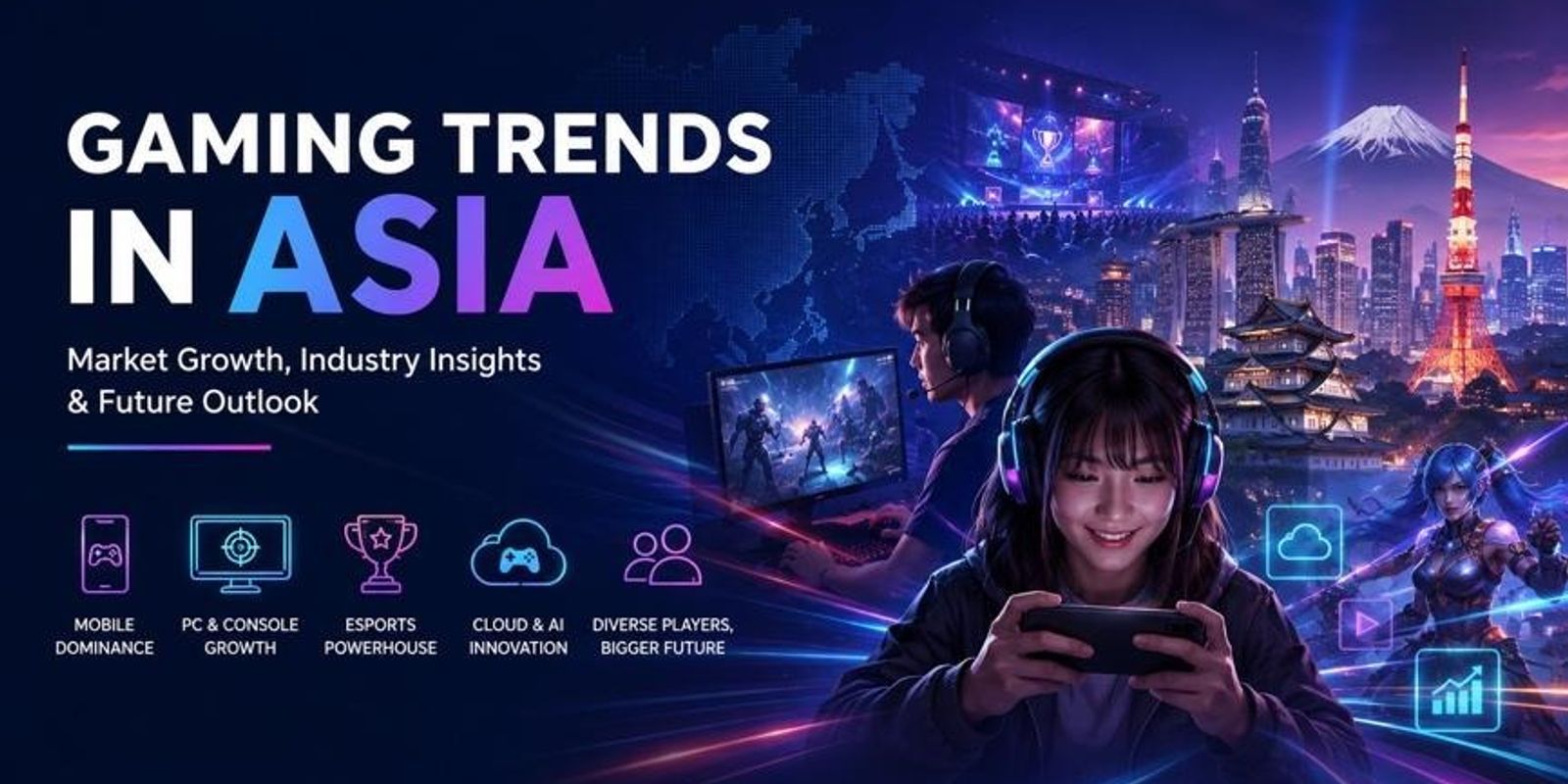
Asia has become the center of the global video game industry. Home to the world’s largest gaming markets, leading game developers, and some of the fastest-growing player communities, the region continues to influence how games are created, distributed, monetized, and experienced.
The latest gaming trends in Asia show a rapidly evolving industry. While mobile gaming remains the foundation of the region’s gaming ecosystem, PC gaming, console adoption, esports, artificial intelligence, cloud gaming, and creator-driven communities are creating new opportunities for publishers and developers.
The Asian gaming market is not a single market. China, Japan, South Korea, India, and Southeast Asia each have different player behaviors, preferred platforms, regulations, payment systems, and gaming cultures. Companies looking to succeed in gaming in Asia need localized strategies rather than a one-size-fits-all approach.
Overview of the Asian Gaming Market
The Asian gaming market represents one of the largest and most influential segments of the global games industry.
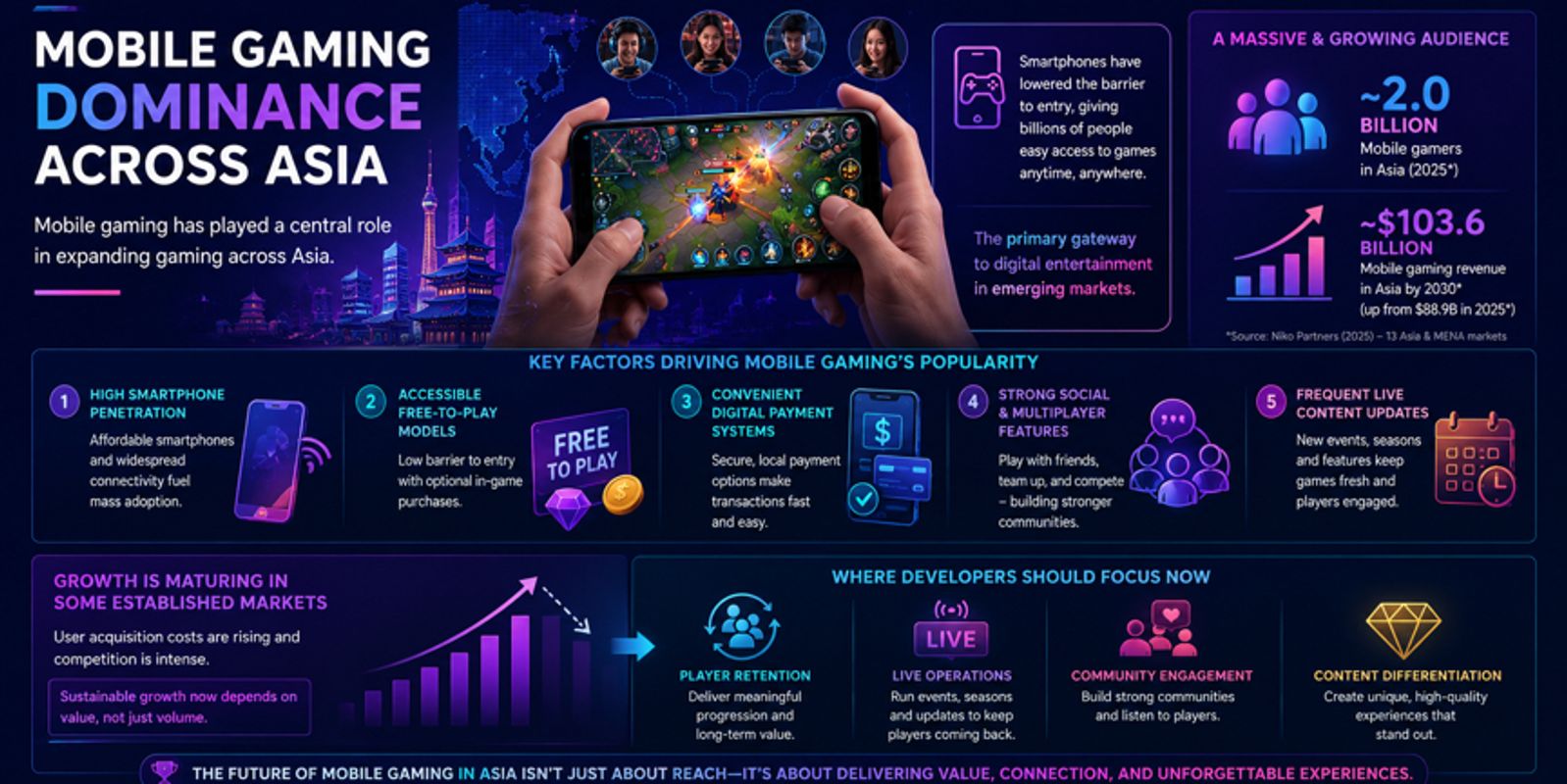
According to Niko Partners, the Asia and MENA markets tracked in its research generated approximately $88.9 billion in video game revenue in 2025 and are projected to reach $103.6 billion by 2030. The number of players across these regions is expected to approach two billion by the end of the decade.
Globally, Newzoo estimated that the gaming industry reached approximately 3.6 billion players and $188.8 billion in revenue in 2025, highlighting the significant contribution of Asian players to worldwide gaming growth.
Asia’s gaming ecosystem includes:
- China – the largest gaming market in Asia with a massive mobile and PC gaming ecosystem
- Japan – a global leader in console gaming and intellectual property development
- South Korea – a pioneer in esports and competitive gaming
- India – one of the fastest-growing gaming markets with more than 500 million players
- Southeast Asia – a rapidly expanding mobile-first gaming region
China remains the largest gaming market in Asia and one of the most important gaming economies globally.
According to the 2025 China Gaming Industry Report, China’s domestic gaming market generated approximately RMB 350.8 billion in revenue, while the number of gamers reached approximately 683 million users.
What makes Asia unique is the combination of mature gaming economies and emerging digital markets, creating opportunities across different platforms, genres, and monetization models.
Key Trends Shaping Gaming in Asia
The gaming industry in Asia is being transformed by several major trends.
1. Mobile Gaming Remains the Dominant Force
Mobile gaming continues to drive growth across many Asian markets.
Smartphones have lowered the barrier to gaming by allowing consumers to access entertainment without purchasing dedicated gaming hardware. This has been especially important in emerging markets where mobile devices are the primary gateway to digital entertainment.
Key factors behind mobile gaming growth include:
- High smartphone penetration
- Affordable free-to-play business models
- Strong digital payment ecosystems
- Social multiplayer features
- Frequent live-service updates
China, India, Indonesia, Vietnam, and the Philippines have all benefited from mobile-first gaming adoption.
However, the mobile gaming market is becoming increasingly competitive. Developers are shifting their focus from simply acquiring new users to improving:
- Player retention
- Community engagement
- Live operations
- Long-term content strategies
Successful mobile games today operate more like entertainment platforms, continuously updating with events, new content, and social features.
2. PC and Console Gaming Are Growing Across Asia
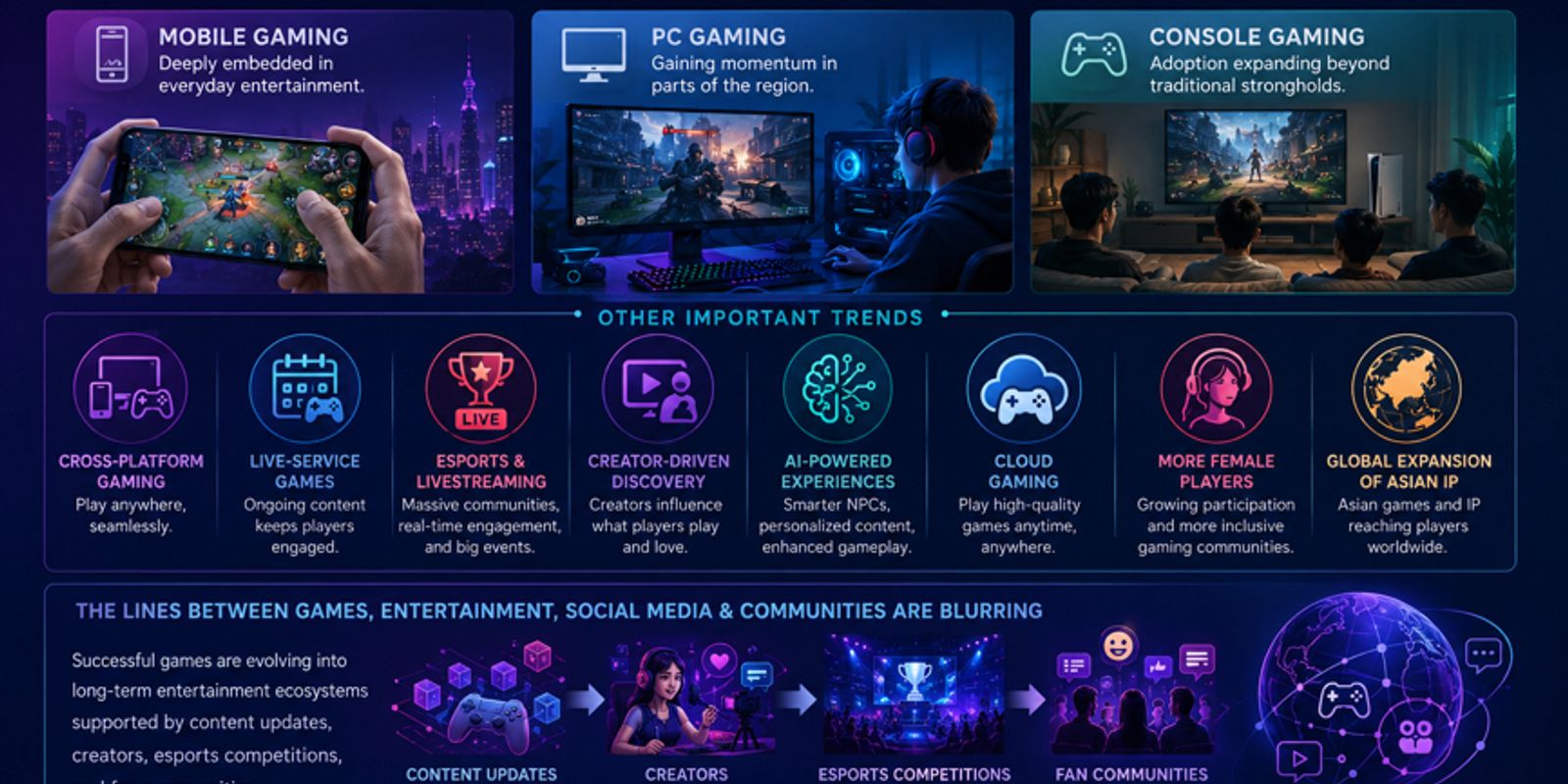
Although mobile gaming remains dominant, one of the important gaming trends in Asia is the growing demand for premium gaming experiences.
PC gaming remains particularly strong in China, South Korea and Southeast Asia
Growth is supported by:
- Competitive multiplayer games
- Esports ecosystems
- Gaming cafés
- Digital platforms such as Steam
China’s PC gaming community has continued expanding, especially among younger players interested in international titles and online multiplayer experiences.
Console gaming remains strongest in Japan, which has historically produced some of the world’s most influential gaming franchises. However, console adoption is gradually increasing in other Asian markets as players seek higher-quality gaming experiences.
Another important shift is the growth of cross-platform gaming. Players increasingly expect games to work seamlessly across:
- PC
- Console
- Mobile
- Cloud platforms
This is encouraging developers to move away from single-platform strategies.
4. Esports and Competitive Gaming Continue to Expand
Asia remains one of the world’s most important esports regions.
South Korea pioneered professional esports, while China and Southeast Asia have developed large competitive gaming communities supported by:
- Professional leagues
- Streaming platforms
- Sponsorships
- Gaming influencers
- Dedicated fan communities
Esports provides value beyond tournaments.
A strong competitive ecosystem can support: long-term player engagement, creator content, brand partnerships, community growth and game longevity
For publishers, esports works best when integrated into a broader ecosystem that includes regular updates, community events, and creator partnerships.
5. AI, Cloud Gaming, and New Technologies
Technology is reshaping how games are developed and experienced.
Artificial Intelligence in Gaming
AI is becoming increasingly important in areas such as:
- NPC behavior
- Personalized recommendations
- Game testing
- Content creation
- Localization
- Customer support
Generative AI may also accelerate development workflows by helping studios create assets, dialogue, and game content more efficiently.
Cloud Gaming
Cloud gaming has the potential to expand access to high-quality gaming experiences without expensive hardware.
However, challenges remain:
- Network infrastructure
- Latency
- Subscription pricing
- Consumer adoption
The future of cloud gaming will depend on whether it can deliver meaningful improvements to player experiences.
Popular Game Genres Among Asian Gamers
Gaming preferences vary significantly across the region, but several genres have established large audiences.
These include:
- Role-playing games (RPGs)
- Multiplayer online battle arena (MOBA) games
- Battle royale games
- Shooters
- Strategy games
- Simulation games
- Casual and puzzle games
Competitive multiplayer titles are particularly influential in China, South Korea, and Southeast Asia, while Japan has historically maintained strong audiences for RPGs and character-driven franchises.
Genre preference should therefore be evaluated at a country level rather than generalized across the entire region.
Challenges Facing the Asian Gaming Industry
Despite strong growth opportunities, companies entering Asia face several challenges.
Regulation Differences
Each market has different requirements related to:
- Game approvals
- Content policies
- Data regulations
- Monetization practices
Market Fragmentation
Companies must adapt to different:
- Platforms
- Payment systems
- Marketing channels
- Player communities
Localization Requirements
Successful localization goes beyond translation.
Developers may need to adapt:
- Game features
- Pricing models
- Marketing messages
- Influencer partnerships
- Community strategies
Future Outlook for Gaming in Asia
The future of gaming trends in Asia will be shaped by innovation, localization, and increasingly connected player communities. While mature markets such as China, Japan, and South Korea will continue to drive premium content, live-service games, and AI adoption, emerging markets including India and Southeast Asia are expected to fuel the next wave of player growth through expanding internet access and smartphone adoption.
Games are also evolving into complete entertainment ecosystems. Players now engage across livestreams, esports, creator content, and community platforms, making long-term engagement just as important as game launches.
For international developers and publishers, success in the Asian gaming market will depend on understanding each country's unique platforms, regulations, payment systems, and player preferences. A localized, market-by-market strategy will remain essential.
At Asia Game Buzz, we closely monitor gaming communities, industry developments, and emerging platforms across the region to provide insights into gaming in Asia. As the industry continues to evolve, staying informed about regional trends and player behavior will help publishers, developers, and marketers identify new opportunities and build stronger connections with Asian gaming audiences.
Frequently Asked Questions
What are the biggest gaming trends in Asia?
The biggest gaming trends in Asia include mobile gaming growth, PC and console expansion, esports, AI-powered gaming, cloud gaming, creator communities, and cross-platform experiences.
Which country has the largest gaming market in Asia?
China is the largest gaming market in Asia, supported by hundreds of millions of players, strong mobile gaming adoption, and a mature digital entertainment ecosystem.
Why is mobile gaming so popular in Asia?
Mobile gaming is popular because smartphones are widely available, games are easy to access, and digital payment systems support convenient in-game purchases.
What makes the Asian gaming market attractive?
The Asian gaming market combines large player populations, strong digital infrastructure, growing consumer spending, and diverse opportunities across mature and emerging economies.
What is the future of gaming in Asia?
The future of gaming in Asia will be shaped by localized strategies, cross-platform experiences, AI innovation, stronger communities, and the continued growth of emerging markets.