'/%3e%3cpath%20d='M84%20126C60.804%20126%2042%20107.196%2042%2084C42%2060.804%2060.8041%2042%2084%2042L84%20126Z'%20fill='%235546FA'/%3e%3c/svg%3e)
China Extended Reality Market
China is emerging as one of the world's most important markets for extended reality (XR), supported by its massive digital consumer base, advanced electronics manufacturing ecosystem, strong gaming industry, and rapid development in artificial intelligence (AI), displays, and wearable technologies.
The China Extended Reality Market includes virtual reality (VR), augmented reality (AR), and mixed reality (MR) technologies. While early XR development focused mainly on VR headsets and gaming, the industry is now expanding into smart glasses, spatial computing, location-based entertainment, education, tourism, retail, healthcare, and industrial applications.
For gaming companies, XR represents more than a new hardware category. The next stage of China's immersive technology development will depend on the combination of advanced devices, high-quality content, AI integration, developer ecosystems, and practical user experiences.
Overview of China's Extended Reality (XR) Market
The China Extended Reality Market has developed into a broad technology ecosystem involving hardware manufacturers, software developers, gaming companies, content platforms, and consumer electronics suppliers.
China has a major advantage in XR development due to its established supply chain for displays, sensors, processors, batteries, optics, and wearable devices. This manufacturing foundation allows companies to rapidly develop and commercialize XR products.
Although gaming and entertainment remain the most visible XR applications, adoption is expanding into multiple industries:
- VR gaming and interactive entertainment
- Cultural tourism experiences
- Digital education
- Industrial simulation training
- Retail marketing experiences
- Healthcare visualization
- Enterprise collaboration
The integration of AI is also accelerating XR development. AI-powered virtual characters, intelligent assistants, and generative content tools are enabling more personalized and dynamic immersive experiences.
Market Size and Growth of Extended Reality in China
The size of China's XR market varies depending on how researchers define the industry. Some reports focus only on XR hardware sales, while others include software platforms, enterprise solutions, content services, and location-based entertainment.
However, recent industry data shows that China's XR market is undergoing a major transformation.
According to RUNTO data, China's consumer XR device market showed a clear structural shift in 2025.
The overall consumer XR device market reached approximately 692,000 units in retail sales in 2025, representing 29.1% year-over-year growth.
However, growth was uneven across categories:
- VR/MR devices declined 24.5%, falling from approximately 269,000 units in 2024 to 203,000 units in 2025.
- AR glasses increased 83.2%, growing from approximately 267,000 units in 2024 to 489,000 units in 2025.
- China's smart glasses market reached approximately 1.454 million units in shipments in 2025, increasing 211% year-over-year.
These trends show that China's XR industry is moving from a VR-headset-driven market toward a broader ecosystem focused on AI glasses, lightweight wearable devices, and everyday immersive computing.
The market is supported by several structural advantages:
- One of the world's largest gaming markets
- Advanced consumer electronics manufacturing
- Rapid AI development
- Growing demand for immersive entertainment
- Government support for digital innovation
The long-term opportunity will increasingly come from applications, content platforms, developer ecosystems, and real-world use cases rather than hardware sales alone.
The Rise of Virtual Reality Gaming in China
Gaming remains one of the strongest drivers of XR adoption.
The China Virtual Reality Gaming Market benefits from the country's large gaming population, mature game development ecosystem, and consumer familiarity with digital entertainment.
Unlike traditional gaming on screens, VR gaming creates a more immersive experience by allowing players to interact with virtual environments through:
- Motion tracking
- Spatial audio
- Hand controllers
- 3D environments
- Real-time interaction
Popular VR gaming categories include:
- Action and adventure games
- Rhythm games
- Fitness applications
- Racing simulations
- Multiplayer social VR
- Location-based VR entertainment
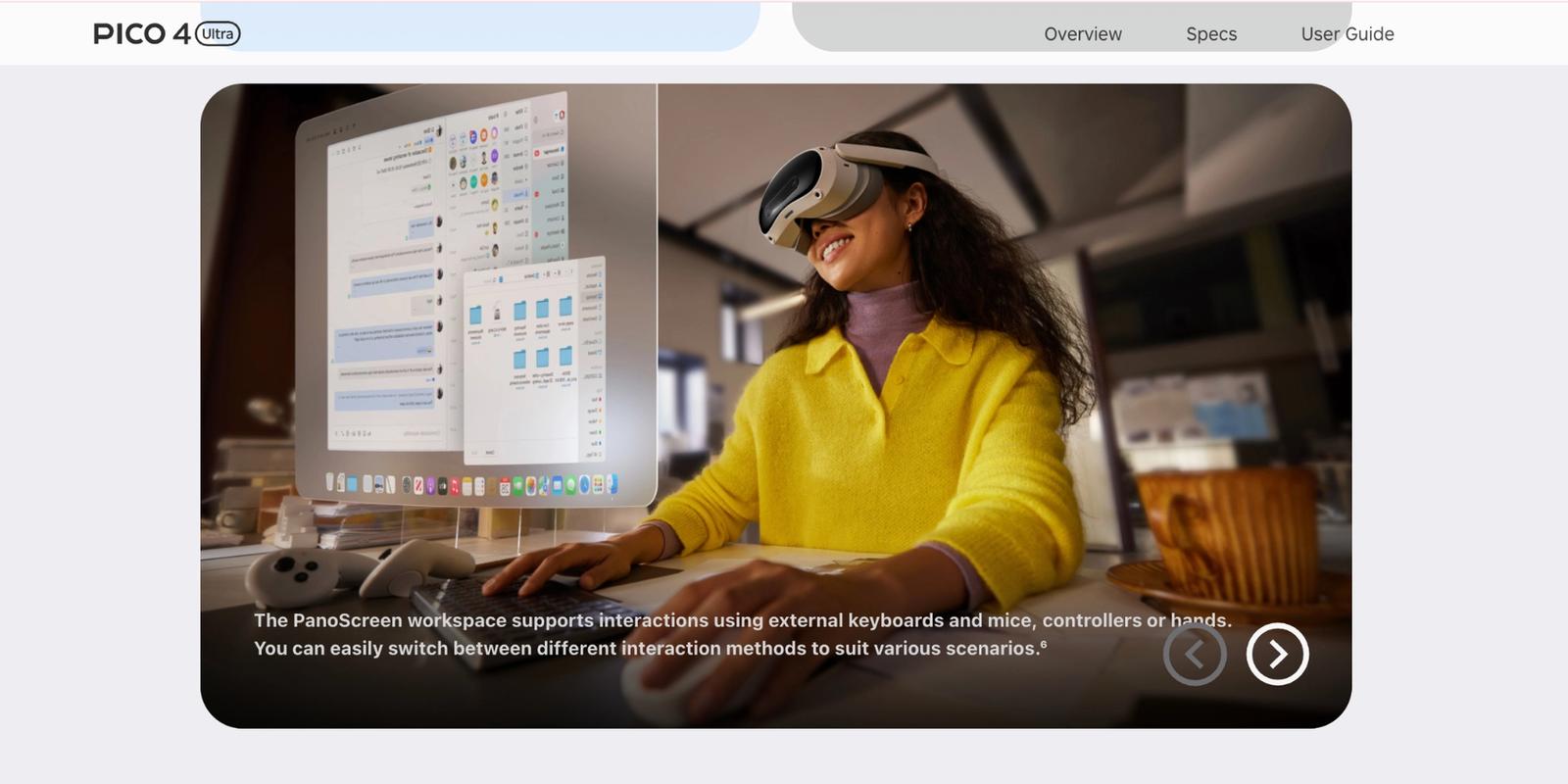
PICO remains one of China's most recognized VR brands. Founded in 2015 and acquired by ByteDance in 2021, PICO expanded China's consumer VR ecosystem through hardware, software, fitness applications, and immersive content.
However, the VR market has entered a more mature phase. Instead of competing only through hardware sales, companies are increasingly focusing on:
- Content quality
- User retention
- Enterprise applications
- Location-based entertainment
Shopping malls, theme parks, museums, and entertainment centers have become important channels for VR adoption because consumers can experience premium equipment without purchasing personal devices.
Immersive Technology Transforming China's Gaming Industry
The China Immersive Technology in Gaming Industry Market is evolving beyond traditional VR experiences.
Modern immersive gaming combines multiple technologies, including:
- Augmented reality (AR)
- Mixed reality (MR)
- Spatial audio
- Eye tracking
- Motion tracking
- Haptic feedback
- Artificial intelligence
AI is expected to become one of the most influential technologies shaping future XR gaming.
Generative AI can help developers create:
- More intelligent non-player characters (NPCs)
- Dynamic game environments
- Personalized storylines
- Automated content generation
- More realistic virtual worlds
Instead of fixed gaming experiences, future XR games may become adaptive digital environments that respond to individual players.
XR is also creating new connections between gaming, livestreaming, social communities, virtual events, and cultural storytelling.
Key Drivers of China's XR Market Growth
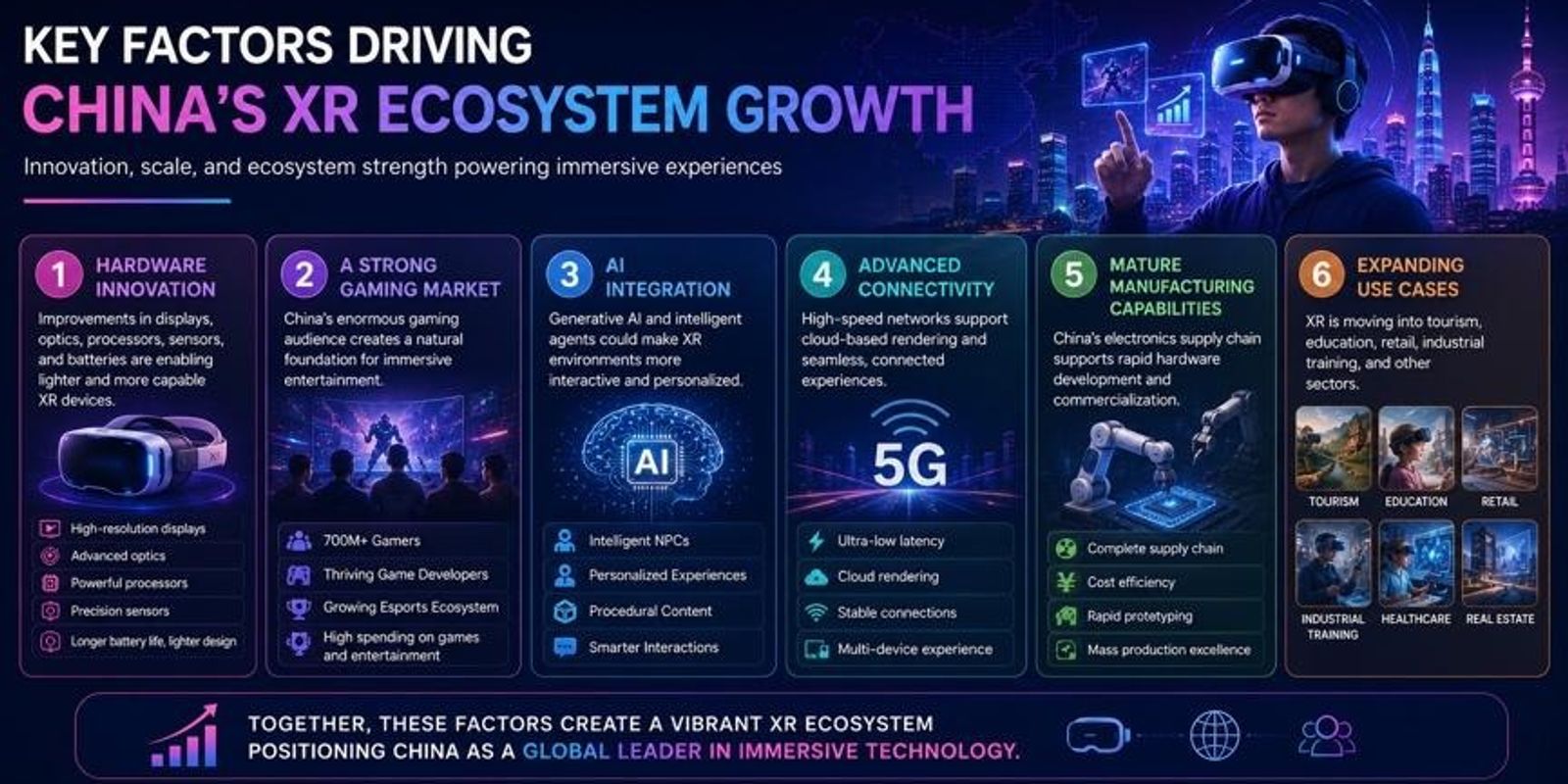
Several structural factors are supporting China's XR ecosystem.
Hardware innovation is making devices lighter and more capable as displays, optics, processors, sensors, and batteries improve.
A strong gaming market provides an established audience familiar with digital entertainment, multiplayer experiences, and virtual economies. China remains one of the world's largest digital game markets, supporting continued investment in new gaming technologies.
AI integration could make XR environments more interactive and personalized through intelligent agents and generative content.
Advanced connectivity can support cloud rendering, connected multiplayer experiences, and content distribution.
Mature manufacturing capabilities allow China's XR companies to benefit from extensive consumer electronics supply chains and rapid product development.
Finally, expanding use cases are taking immersive technology beyond gaming into tourism, education, retail, industrial training, and other sectors.
Together, these factors create an important advantage: China can participate across much of the XR value chain, from components and manufacturing to platforms, applications, and content.
Augmented Reality (AR), Virtual Reality (VR), and Mixed Reality (MR) Explained
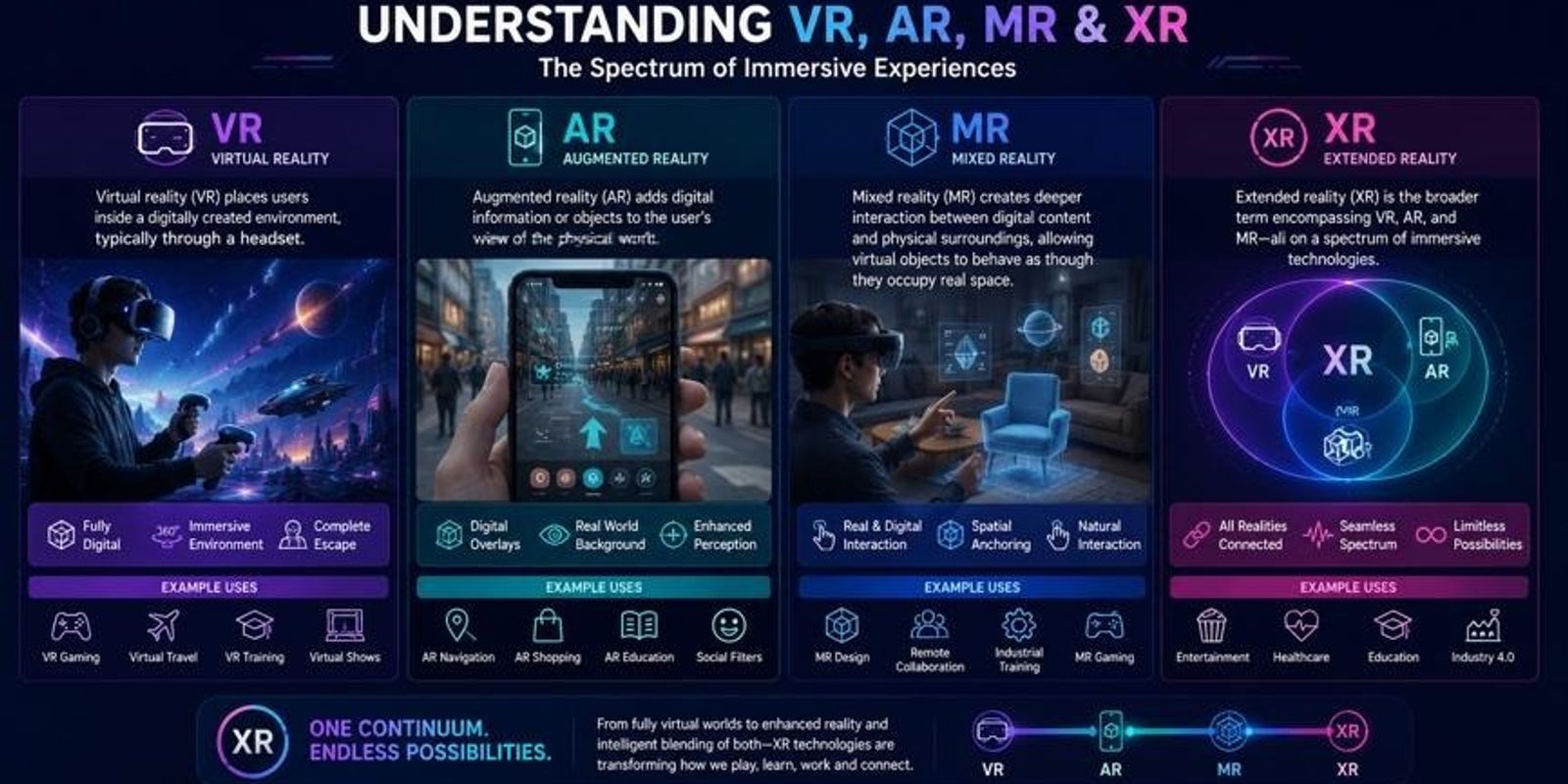
Although these terms are often grouped together, they describe different levels of interaction between physical and digital environments.
Virtual reality (VR) places users inside a digitally created environment, typically through a headset.
Augmented reality (AR) adds digital information or virtual objects to the user's view of the physical world.
Mixed reality (MR) creates deeper interaction between digital content and physical surroundings, allowing virtual objects to appear anchored to and interact with real spaces.
Extended reality (XR) is the broader umbrella term coveringVR, AR, and MR technologies.
Future XR devices are expected to combine these experiences, allowing users to move naturally between digital and physical spaces.
Leading Companies Shaping China's XR Industry
China has developed a diverse ecosystem of companies working across VR, AR, smart glasses, and immersive computing.
PICO is one of the country's most recognizable consumer VR brands, with a focus on headsets and immersive content.
XREAL has built its position around AR glasses and wearable displays, while Rokid has developed AR products for both consumer and enterprise applications. RayNeo, backed by TCL, is another notable participant in the smart-glasses category.
Larger technology companies also contribute to the broader ecosystem through gaming, artificial intelligence, hardware, connectivity, cloud infrastructure, and digital platforms.
The competitive landscape is likely to continue evolving as XR converges with AI. The companies that ultimately lead the market may not necessarily be those that sell the most headsets today, but those that build the strongest combination of hardware, operating systems, applications, content, and developer communities.
Popular XR Gaming Applications in China
XR gaming applications in China are developing across both home and offline environments.
At home, popular experiences include:
- VR action games
- Fitness applications
- Simulation games
- Social VR platforms
- Multiplayer experiences
Outside the home, XR is increasingly used in:
- Museums
- Theme parks
- Cultural attractions
- Shopping centers
- Tourism destinations
These applications show that XR is becoming more than a gaming device. It is evolving into a broader interactive entertainment platform.
Government Support and Investment in XR Technologies
China has included virtual reality and immersive technologies within its broader digital economy development strategy.
A major policy milestone came in 2022 when China's Ministry of Industry and Information Technology (MIIT), together with other government departments, released an action plan supporting VR integration with industrial applications.
The policy focuses on:
- XR hardware innovation
- Industrial applications
- Content development
- Commercial adoption
However, government support alone cannot guarantee consumer adoption. Long-term success will depend on product quality, compelling applications, sustainable business models, and real user demand.
Challenges Facing China's Extended Reality Market
Despite strong growth potential, several challenges remain.
Hardware Limitations
Current challenges include:
- Device cost
- Battery limitations
- Weight and comfort
- Motion sickness
- Display quality
Content Shortage
Consumers need strong applications and games before investing in XR devices.
Ecosystem Fragmentation
Developers face challenges related to:
- Platform differences
- Monetization
- Distribution
- User acquisition
International Market Challenges
For international companies, localization adds another layer of complexity. Content distribution, partnerships, regulatory requirements, payment systems, and consumer expectations can differ substantially from other markets.
Future Trends in China's Virtual Reality and Immersive Gaming Market
The future of the China Extended Reality Market will likely be shaped by convergence between XR, AI, gaming, and wearable technology.
Key trends include:
- Lightweight AR glasses
- AI-powered virtual characters
- More realistic immersive worlds
- Cross-platform XR experiences
- Growth of location-based entertainment
- Integration of gaming with cultural tourism
- Expansion of spatial computing applications
The next stage of XR growth will not be determined only by hardware innovation. Companies that create meaningful experiences and solve real user needs will have the strongest opportunities.
For gaming companies entering China, the key question is not simply:
"How can we launch an XR product?"
Instead:
"What experience can XR deliver better than existing technologies?"
Companies that combine advanced technology, compelling content, and strong understanding of China's digital ecosystem will be best positioned to succeed.
Frequently Asked Questions
What is the China extended reality market?
The China Extended Reality Market includes technologies, devices, software, content, and services related to VR, AR, and MR. Applications range from gaming and entertainment to education, tourism, retail, and industrial solutions.
How big is China's virtual reality gaming market?
The China Virtual Reality Gaming Market is expanding due to China's large gaming population, strong technology ecosystem, and increasing adoption of immersive entertainment. Market estimates vary depending on whether hardware, software, and location-based experiences are included.
What is immersive technology in the gaming industry?
The China Immersive Technology in Gaming Industry Market refers to the use of VR, AR, MR, AI, spatial audio, tracking technologies, and interactive systems to create more realistic digital experiences.
Which companies lead China's XR market?
Leading XR companies include PICO, XREAL, Rokid, and RayNeo, supported by China's broader electronics, AI, and gaming industries.
What is the future of extended reality in China?
China's XR future will likely be driven by AI integration, lighter wearable devices, stronger content ecosystems, and expansion beyond gaming into tourism, education, and enterprise applications.