
How to Advertise in China: Platforms, Costs and Strategies for Foreign Brands
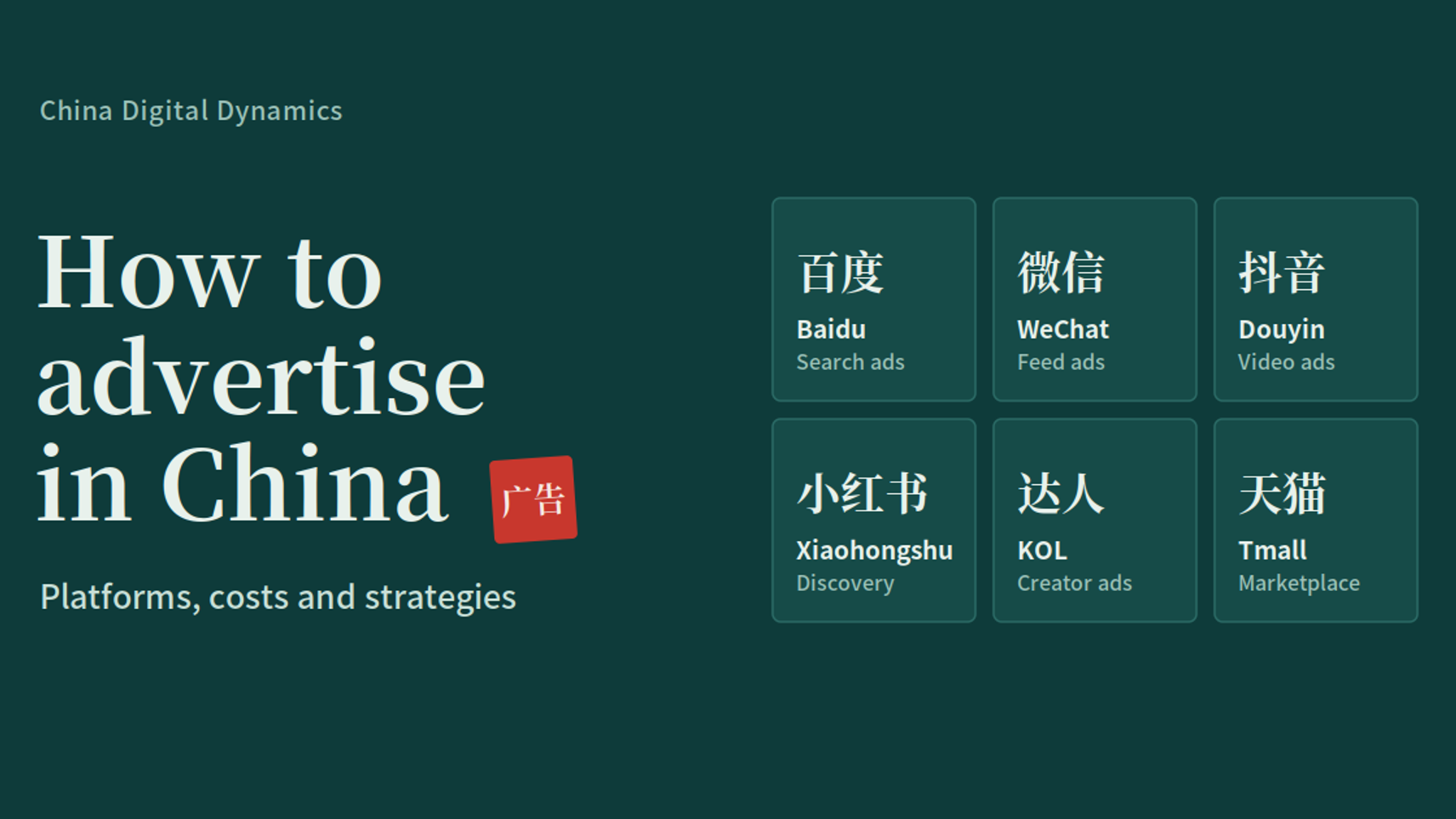
To advertise in China, foreign brands need local ad accounts, Chinese-language creative and landing pages, and a channel mix built around Chinese platforms. Google and Meta ads cannot reach most mainland users because those platforms are blocked, and each major Chinese app runs its own closed ad system, so a Western ad stack does not transfer.
The main channels for digital advertising in China are Baidu search ads, WeChat (Tencent Ads), Douyin (Ocean Engine), Xiaohongshu, Weibo, Bilibili, Kuaishou, KOL networks and e-commerce marketplaces. This guide explains how online advertising in China works, which China advertising platforms fit your goals, what it costs, what the rules are, and how to measure results. Advertising works best as part of a wider China market entry strategy, so read this alongside your plans for search, PR and commerce.
How Does the Chinese Digital Advertising Market Work?
How it differs from Western ad ecosystems
In the West, a few ad networks cover most of the web. In China, each platform owns its audience, its data and its ad tools. WeChat ads run through Tencent Ads, Douyin ads through ByteDance’s Ocean Engine, and search ads through Baidu. Targeting options, creative specs, reporting and billing differ on every platform, and audience data is not shared across them, so you manage and measure each channel on its own terms.
Chinese consumer journeys and mobile-first behavior
Almost everything happens on a phone and inside apps. A typical journey starts with discovery on Douyin or Xiaohongshu, moves to research through in-app search, Baidu and reviews, and ends with purchase through a WeChat Mini Program or an e-commerce marketplace. QR codes connect offline and online touchpoints, so your ads, landing pages and checkout all need to work smoothly on mobile.
Why localization drives performance
Literal translation reads as foreign and loses trust. Ads perform when the message, visuals, offers, payment options and customer service match local expectations. Localized landing pages in Simplified Chinese usually decide whether paid clicks convert.
What Are the Best Advertising Platforms in China?
- Baidu Ads (百度推广) for search advertising. Baidu is China’s main search engine for intent-driven traffic, and the Baidu App had 644 million monthly active users in June 2026. Baidu’s online marketing revenue fell 19% year over year to RMB 13.1 billion in Q2 2026 as it shifts toward AI-powered search, so test search ads and also check how your brand appears in AI-generated answers.
- WeChat Ads (微信广告) for social ads and Official Account reach. WeChat reached 1.439 billion combined Weixin and WeChat monthly active users in June 2026 (Tencent). Ad placements include Moments feed ads, Official Account ads, video ads and Mini Program ads, with links into your own Official Account and Mini Program.
- Douyin Ads (抖音广告), including Ocean Engine, for short-video advertising. Douyin had about 1.01 billion monthly active users in March 2026 (QuestMobile). It suits product demonstrations, in-feed video ads, livestream promotion and social commerce.
- Xiaohongshu Ads (小红书广告) for discovery by lifestyle brands. Xiaohongshu had about 245 million monthly active users in March 2026 (QuestMobile estimate; the company does not publish audited figures). Users search it for reviews before buying, which makes it strong for beauty, fashion, travel and lifestyle.
- Weibo Ads (微博广告) for awareness and trending topics. Weibo reported 561 million monthly active users in June 2026, and works well for launches, announcements and public conversation.
- Bilibili and Kuaishou for video-focused campaigns. Bilibili reported 371 million monthly active users in Q2 2026 with a younger, interest-driven audience. Kuaishou reported 412.3 million average daily active users in Q2 2026 and is strong for livestream commerce and reach outside tier-one cities.
Figures come from different sources and methods, so treat them as scale indicators rather than exact rankings.
How to Choose the Right Advertising Platform in China
E-commerce and consumer brands
Combine Douyin and Xiaohongshu for discovery with Tmall, JD.com or Tmall Global and JD Worldwide for conversion. Use WeChat Mini Programs for repeat purchase and CRM.
B2B companies
Baidu search ads capture buyers actively researching suppliers, while WeChat Official Account content and ads nurture leads. Use Weibo and PR for credibility. B2B buyers want proof, so landing pages should carry case studies, certifications and clear contact options.
Beauty, fashion, and lifestyle
Xiaohongshu leads for research and recommendations, Douyin adds demonstration and livestream sales, and KOL and KOC content builds trust across both.
Gaming and entertainment
Bilibili, Douyin and Weibo are the main video and community channels for trailers, launches and creator tie-ins. For context on this market, read our overview of gaming trends in Asia, and our analysis of China’s extended reality market if you sell immersive technology.
Compare audience, objective, cost, and conversion
- Baidu has a high-intent search audience, suits lead generation and sales, has competitive keyword costs in popular categories, and converts best with strong localized landing pages.
- WeChat has a broad all-age audience, suits retention and conversion, and converts through Official Accounts and Mini Programs.
- Douyin has a mass-reach audience, suits awareness through to purchase, and converts through video, livestreams and in-app commerce.
- Xiaohongshu has a lifestyle-focused shopper audience, suits consideration and research, and converts best when ads are backed by authentic reviews.
- Weibo has a broad, news-driven audience, suits awareness and PR, and converts mainly through campaigns and hashtags.
- Bilibili and Kuaishou suit community building and livestream commerce, and convert through video and creator content.
What Types of Digital Advertising Are Available in China?
Search ads
Keyword-based text ads on Baidu and other search engines capture users with clear intent and are billed per click.
Feed and social ads
Native in-feed ads on WeChat, Xiaohongshu, Weibo and Douyin look like organic content. They work best when paired with a consistent content presence, which we cover in our guide to social media marketing in China.
Short-video and livestream ads
Video ads and livestream promotion show products in use and drive immediate action, especially on Douyin and Kuaishou.
KOL campaigns
Sponsored posts, reviews and livestream partnerships with creators add social proof. Learn how to plan them in our guide to KOL and KOC marketing for international brands, or see our KOL and influencer marketing services for vetting and execution support.
Display and retargeting
Banner, splash and retargeting ads rebuild awareness and re-engage users who have already shown interest.
Marketplace ads (Tmall, JD.com)
Search and display ads inside Tmall, JD.com, Tmall Global and JD Worldwide put products in front of shoppers who are ready to buy.
How to Build an Advertising Strategy for China
- Research your market and competitors. Check which platforms your category uses, what rivals advertise and which keywords and creators matter.
- Set goals and KPIs. Choose awareness, leads or sales, and the metric that proves each one.
- Localize copy, creative and landing pages. Write in Simplified Chinese, adapt visuals and offers, and build mobile landing pages that load fast in mainland China.
- Choose platforms by audience and goal. Start with one or two platforms rather than all of them.
- Test messages and segments. Run small tests of creatives, offers and audiences before scaling.
- Optimize from performance data. Cut weak ads, scale winners and review results by platform every week.
How Much Does Advertising in China Cost?
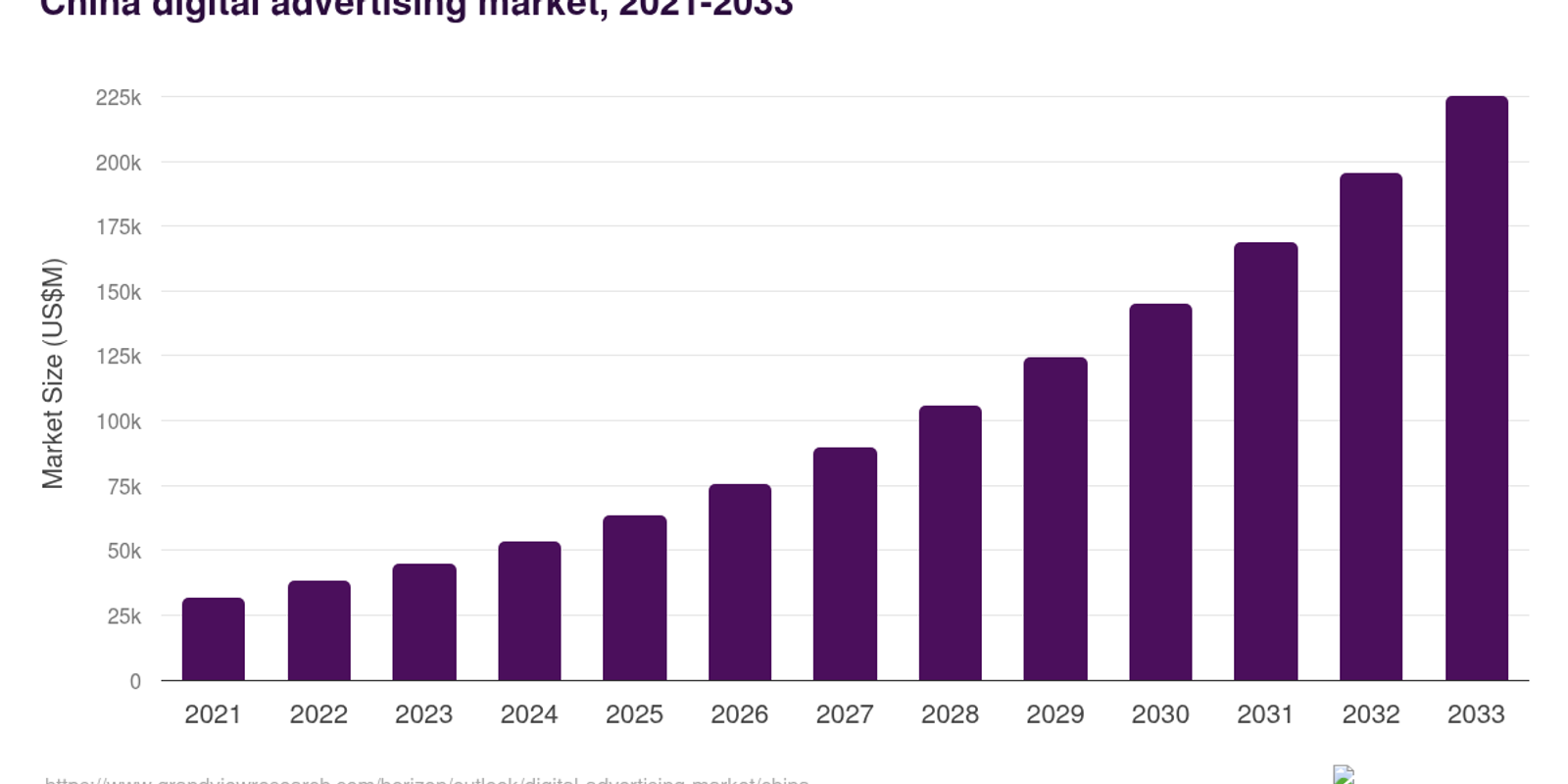
What drives costs
Costs depend on category competition, platform, targeting, creative quality, seasonality (such as 618 and Singles’ Day) and your campaign objective. Prices change often, so confirm current rates with each platform or your agency before setting a budget.
Search vs. social costs
Search ads are usually billed per click (CPC) and rise with competition for popular keywords. Social and video ads are commonly billed per thousand impressions (CPM), per click or per action, and often cost less per reach but need stronger creative to convert.
KOL fees and production
KOL pricing varies by platform, follower tier, content format and usage rights. Add the cost of content production, translation, landing pages and any paid amplification of creator posts.
Budgets for SMEs and global brands
Small businesses should test one platform with a limited budget and a clear conversion goal. Global brands can fund several channels and test them in parallel. If you need a lower-risk start, our China market-entry package for small businesses bundles media exposure, account setup and localized content.
Evaluating CPC, CPL and ROAS
- Cost per click (CPC) is ad spend divided by clicks.
- Cost per lead (CPL) is ad spend divided by qualified leads.
- Return on ad spend (ROAS) is revenue divided by ad spend.
Judge campaigns on CPL and ROAS, not clicks alone, and compare them with your margins and customer lifetime value.
How Can Foreign Companies Advertise in China?
Local agency or partner?
A local partner helps with account setup, Chinese-language creative, compliance review, creator vetting and reporting. It is not always required, but it reduces delays and costly mistakes. Explore our digital marketing services for China to see what that support covers.
Account setup and advertiser eligibility
Some platforms and campaign types accept overseas advertisers, while others require a mainland entity or an authorized local account holder. Platform onboarding rules can be stricter than the law and can change without notice, so confirm eligibility and required business documents before you plan campaigns.
Chinese-language campaigns and landing pages
Use native-written Simplified Chinese for ads, landing pages, forms and customer service. Make sure pages load quickly in mainland China and support WeChat and mobile payment where relevant.
Cross-border vs. local presence
Cross-border selling through Tmall Global or JD Worldwide is a lower-commitment way to test demand. A local entity gives more advertising options, faster fulfillment and stronger trust, but adds cost and compliance work. Choose based on your product, margins and long-term China plans.
Building trust with local customer service
Fast Chinese-language support on WeChat, clear return policies and visible reviews strongly affect conversion. Ads bring visitors in, and service decides whether they buy.
What Are China’s Advertising Regulations?
This section is general information, not legal advice. Have a qualified lawyer review claims and campaigns before launch.
Advertising claims and industry restrictions
China’s Advertising Law requires ads to be true, lawful and not misleading. Superlatives such as “best” or “number one” are generally restricted, and categories such as healthcare, food, alcohol and finance face extra rules and sometimes pre-approval.
Platform policies and advertiser verification
Platforms review ads and verify advertisers, and they can reject creatives or accounts that break their rules even when the law allows them.
Influencer disclosure rules
Ads must be identifiable as ads, which includes sponsored creator content and livestreams. The advertiser stays responsible for truthful claims even when an agency or influencer creates the content. China’s measures for livestream e-commerce also took effect on February 1, 2026, so review current livestream rules before running them.
Data privacy (PIPL) and consumer protection
The Personal Information Protection Law governs how you collect, store and transfer customer data, including data from forms, Mini Programs and CRM. Consumer protection rules cover returns, pricing and product claims.
Verifying current requirements before launch
Rules and platform policies change often. Check the latest requirements with your agency, the platform and legal counsel before each campaign.
How Do You Measure Advertising Performance in China?
- Impressions, reach and CTR show whether creative and targeting attract attention.
- Leads, conversions and CAC show whether traffic turns into customers at an acceptable cost.
- ROAS and profitability show whether campaigns make money after margins.
- Cross-platform tracking uses platform dashboards, unique landing pages, Mini Program analytics and UTM or channel codes, because platforms do not share data.
- Testing and optimization means comparing creatives, audiences and offers on a regular schedule and shifting budget to what converts.
What Advertising Mistakes Should You Avoid in China?
- Using Western platforms without checking availability. Many are blocked or ineffective in mainland China.
- Translating literally instead of localizing. Rework the message, not only the words.
- Choosing platforms by popularity. Match platform to audience and goal.
- Ignoring mobile-first behavior. Design every ad and page for a phone.
- Underestimating account setup and compliance. Approvals and verification can take time.
- Not measuring business outcomes. Track leads and revenue, not just impressions.
Advertising in China: FAQs
How can a foreign company advertise in China?
Set up eligible ad accounts, create Simplified Chinese ads and landing pages, choose one or two platforms that fit your audience, and track leads or sales. Many foreign brands work with a local agency for setup and compliance.
What are the best advertising platforms in China?
Baidu for search intent, WeChat for retention and conversion, Douyin for reach and video, Xiaohongshu for discovery and reviews, plus Weibo, Bilibili, Kuaishou and e-commerce marketplaces depending on your goals.
Is Baidu advertising effective?
It can be, especially for high-intent searches and B2B leads. Baidu’s ad revenue has been under pressure as search shifts toward AI, so test performance against other channels and review how your brand appears in AI-generated answers.
How much does digital advertising in China cost?
Costs vary by platform, category, targeting and creative, and change with seasonality. Get current quotes, start with a small test budget, and judge results by CPL and ROAS.
Can foreign companies advertise on WeChat and Douyin?
Often yes, but eligibility depends on the platform, campaign type and business documents, and some options require a mainland entity or local account holder. Confirm requirements before planning.
Do you need a Chinese agency to advertise in China?
Not legally in every case, but a local partner makes setup, creative, compliance and reporting much easier, especially for first-time advertisers.
Conclusion
Successful advertising in China means choosing the right channels, localizing every touchpoint, staying compliant and measuring business results. Start with one or two platforms that match your goals, learn what converts, then expand. For more guidance on the China market, browse our latest China market insights.