'/%3e%3cpath%20d='M84%20126C60.804%20126%2042%20107.196%2042%2084C42%2060.804%2060.8041%2042%2084%2042L84%20126Z'%20fill='%235546FA'/%3e%3c/svg%3e)
How to Localize Content for the Chinese Market

In China, content does more than communicate it converts, validates, and builds trust at scale. For global brands, content localization China is not about simply “sounding Chinese,” but about achieving relevance in a highly competitive, culturally nuanced, and platform-driven market. Brands entering this ecosystem benefit from insights shared by platforms like China Digital Dynamics.
As Chinese digital platforms dominate the consumer journey, brands must master Chinese content adaptation to meet local expectations. Companies that invest in strategic localization gain faster market acceptance, stronger engagement, and long-term brand equity, particularly when supported by localized strategies outlined in China Digital Dynamics services.
Understanding Chinese Consumer Behavior Before Localizing
Successful localization starts with understanding Chinese consumer behavior. Chinese consumers are mobile-first, socially influenced, and highly pragmatic. They rely heavily on peer opinions, online reviews, and community validation before making purchasing decisions patterns frequently analyzed in China’s evolving digital trust landscape.
Content that performs well in China typically provides practical value, reduces uncertainty, and demonstrates real-world use cases. Tutorials, reviews, comparisons, and user-generated content outperform abstract brand narratives. Without aligning content to Chinese consumer behavior, even high-quality global content struggles to convert, especially across influencer-led ecosystems discussed in creator-driven Chinese platforms.
What Content Localization in China Really Means (Beyond Translation)
A major misconception in content localization China strategies is assuming translation equals localization. Translation converts language; localization converts intent, structure, and relevance an approach often required in complex market entry scenarios such as those outlined in China Digital Dynamics’ complex solutions.
Chinese audiences prefer clarity, logic, and context-rich explanations. Headlines often need to be rewritten rather than translated, while calls-to-action should reflect local behavior encouraging consultation, exploration, or social engagement. True Chinese content adaptation transforms global messaging into local conversion drivers.
Mandarin Content Marketing: Speak Clearly, Naturally, and with Purpose
Mandarin content marketing requires linguistic precision and cultural fluency. Mandarin is concise and context-driven, and audiences quickly recognize unnatural phrasing or awkward expressions making native expertise essential when developing localized content strategies via professional China-focused services.
Effective Mandarin copy varies by platform. Conversational, trend-aware language performs well on Douyin and Xiaohongshu, while WeChat and knowledge platforms require authority and clarity. Investing in native Mandarin copywriting enhances credibility and significantly improves content performance in China’s digital ecosystem.
Cultural Relevance Drives Engagement: Applying Cross-Cultural Marketing in China

Strong cross-cultural marketing in China requires brands to align with local values rather than replicate Western narratives. Themes such as collective progress, self-improvement, harmony, and long-term benefit resonate more than disruption or confrontation an insight echoed across multiple China Digital Dynamics market studies.
Cultural relevance also involves understanding symbolism, timing, and social norms. Campaigns aligned with Chinese festivals, seasonal behaviors, or cultural moments feel authentic and timely. Cross-cultural fluency allows brands to connect emotionally, which is essential for trust-building in China.
One Market, Many Audiences: Adapting Content Across Regions and City Tiers
China is not a single unified market. Effective Chinese content adaptation considers differences across regions, city tiers, and consumer sophistication levels particularly important for brands scaling across multiple Chinese platforms.
Tier 1 cities often respond to lifestyle-driven and brand-led messaging, while lower-tier markets may prioritize practicality and price transparency. Regional references, localized examples, and tailored messaging significantly improve content relevance and engagement, as demonstrated in region-specific localization strategies supported by China Digital Dynamics insights.
McDonald’s offers a strong example of Chinese content adaptation through its localization between Mainland China and Hong Kong, where language and cultural framing differ significantly. In Mainland China, content is published in Simplified Chinese and typically emphasizes value, family connection, and collective warmth reflecting mainstream Chinese consumer behavior. This approach was visible in McDonald’s recent Winter Solstice (冬至) post on Weibo, which focused on seasonal tradition and shared moments in a direct, emotionally reassuring style. In contrast, McDonald’s Hong Kong communicates in Traditional Chinese and adopts a more lifestyle-oriented tone. Its Winter Solstice post on the Hong Kong Facebook page leaned toward visual storytelling and personal enjoyment, aligning with Hong Kong’s urban and expressive content culture. Although the occasion was identical, McDonald’s adjusted language, emotional emphasis, and platform execution to suit local expectations, demonstrating how effective content localization in China goes beyond translation to reflect cultural nuance and audience mindset.


Adapting Visuals, Colors, and Design for Chinese Audiences
Visual localization plays a critical role in content localization China success. Chinese audiences are accustomed to information-rich layouts, clear visual hierarchy, and culturally meaningful color usage design principles frequently applied in China-focused digital strategies.
Colors convey strong symbolism: red represents luck and celebration, gold suggests premium value, and vibrant palettes signal optimism and energy. Successful Chinese content adaptation balances clarity with richness to meet local visual expectations.
Platform-Specific Localization (WeChat, Weibo, Douyin, Xiaohongshu)
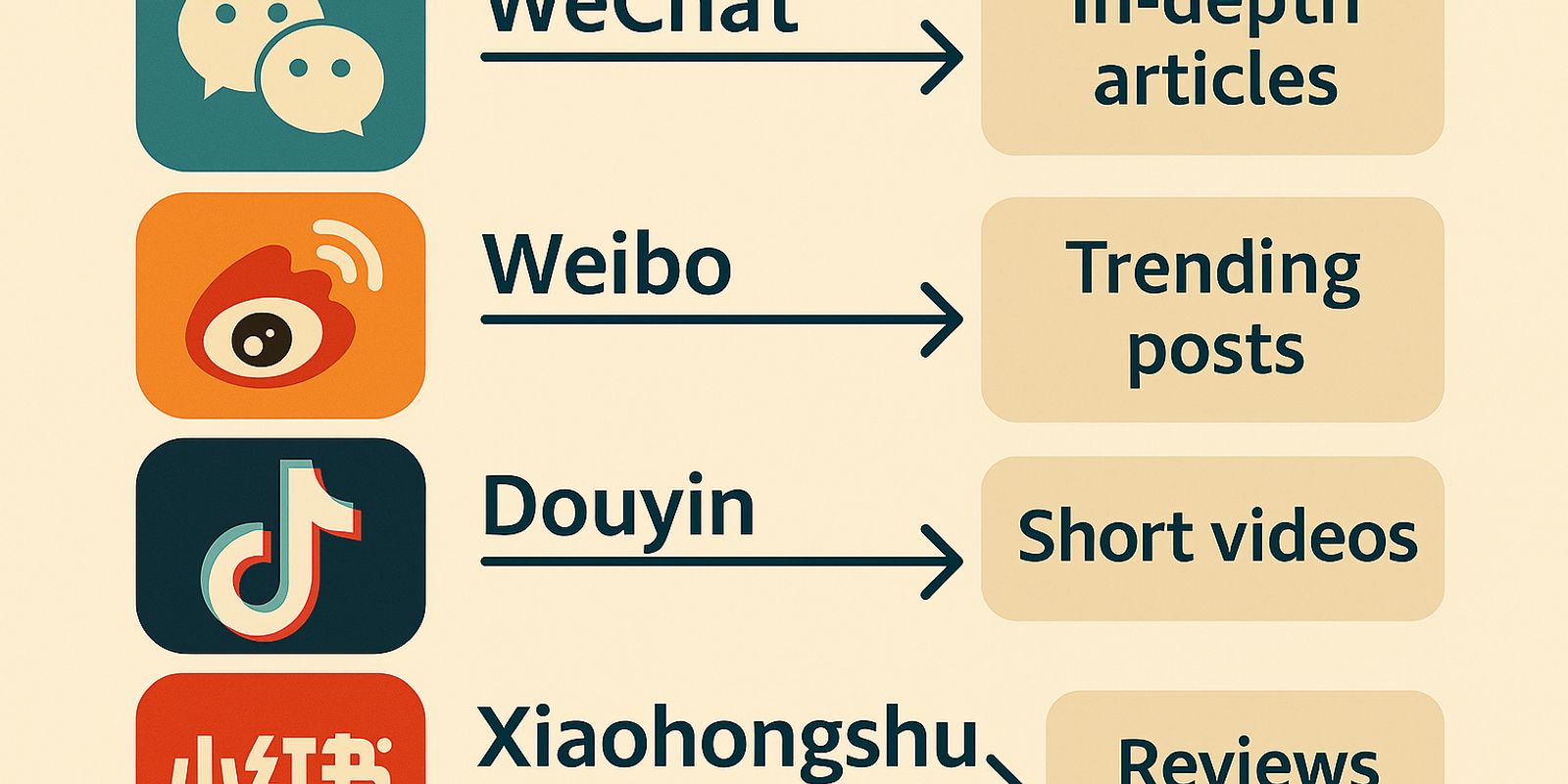
Each major Chinese platform operates with distinct content logic. WeChat supports long-form education, CRM, and private traffic. Weibo drives reach and trending visibility. Douyin rewards short, emotional video, while Xiaohongshu thrives on authentic reviews and lifestyle storytelling patterns explored in China’s platform-specific market insights.
High-performing brands localize content by platform behavior, not just format. Platform-specific content localization China ensures that messages align with how users discover, consume, and interact with content.
Winning Formats: What Content Actually Converts in the Chinese Market
In China, content that educates and empowers consistently outperforms content that simply promotes. Short videos, livestreams, step-by-step guides, comparisons, and user-generated content dominate engagement metrics across Chinese digital platforms.
Brands that position themselves as practical problem-solvers earn credibility and long-term trust. Selecting the right format is a core component of effective Chinese content adaptation, particularly in competitive sectors such as tourism and lifestyle, as highlighted in China tourism digital strategies.
Brand Voice Localization: Aligning Personality with Chinese Cultural Values
A localized brand voice in China should feel knowledgeable, supportive, and socially aware. Authority is built through expertise rather than exaggeration, reinforcing trust within China’s digitally savvy audience.
Humor must feel culturally natural, while confidence should remain subtle. Brands that establish consistent voice guidelines as part of their content localization China strategy can scale content without losing authenticity, particularly when managing multi-platform presence.
Legal and Regulatory Considerations for Content Localization in China
All localization efforts must comply with China’s advertising and content regulations. Restrictions apply to exaggerated claims, sensitive topics, and regulated industries making compliance a strategic necessity in any Mandarin content marketing initiative.
Compliance is not a limitation but a trust signal. Brands that demonstrate responsibility and transparency strengthen credibility and consumer confidence through compliant localization practices.
Proving Impact: How to Measure Localization Success in China
Measuring performance goes beyond views and likes. Engagement depth, shares, saves, comments, and conversion behavior reveal true localization effectiveness across China’s digital platforms.
On platforms like WeChat, private traffic growth, retention, and repeat interactions are key KPIs. Tracking localized content performance over time helps refine Chinese content adaptation strategies and optimize long-term results.
Avoid These Localization Traps (and How to Fix Them)
Common pitfalls include over-translating global content, ignoring platform culture, and treating localization as a one-time project. Another mistake is failing to evolve content as trends and consumer expectations change issues frequently observed in poorly localized market entries.
The solution is continuous optimization, local insight, and agility. Brands that treat content localization China as an ongoing strategic investment consistently outperform competitors.
Conclusion: Building a Sustainable Localization Strategy for China
Effective content localization in China is not about perfection it is about relevance and consistency. Brands that understand Chinese consumer behavior, apply cross-cultural marketing in China, and invest in Mandarin content marketing build lasting resonance.
In a fast-moving, highly competitive digital environment, the brands that succeed are those that don’t simply enter China they adapt, integrate, and grow with it, supported by experienced China-focused digital partners like China Digital Dynamics.