'/%3e%3cpath%20d='M84%20126C60.804%20126%2042%20107.196%2042%2084C42%2060.804%2060.8041%2042%2084%2042L84%20126Z'%20fill='%235546FA'/%3e%3c/svg%3e)
China Market Entry Checklist- 10 Things US Brands Must Do Before Launch
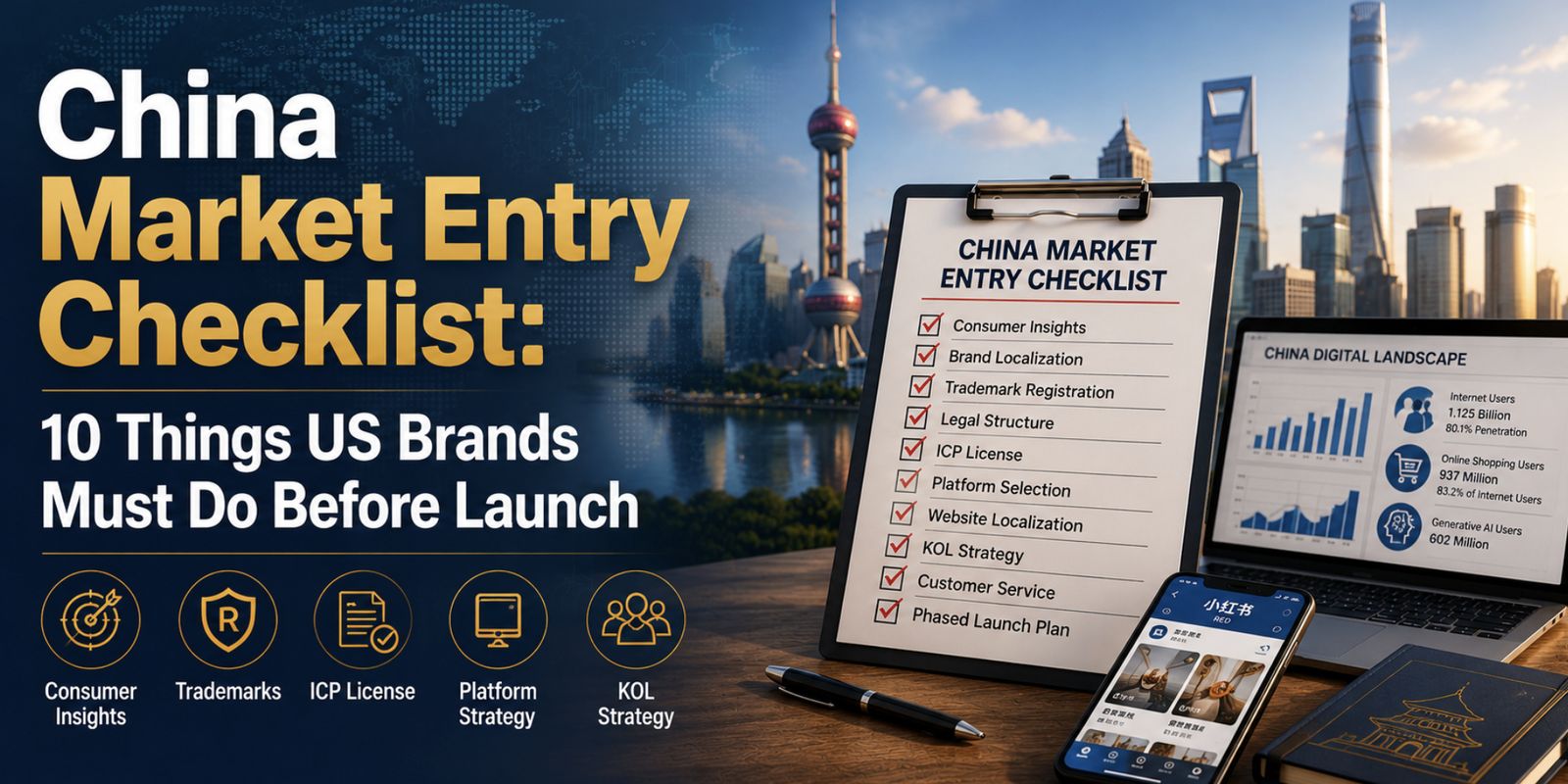
China Market Entry Checklist: 10 Things US Brands Must Do Before Launch
Expanding into China offers significant growth opportunities, but success rarely comes from improvisation.
Direct answer: A successful China market entry strategy for US brands requires preparation across legal, operational, digital marketing, localization, and customer experience areas before launch.
Many international brands fail not because their products are weak, but because they underestimate how different China's digital ecosystem, consumer expectations, and regulatory environment are from Western markets.
According to the latest China Internet Network Information Center (CNNIC) report, China had 1.125 billion internet users by the end of 2025, with internet penetration reaching 80.1%. At the same time, 602 million users had adopted generative AI technologies, highlighting how quickly Chinese consumers are embracing new digital behaviors. Online shopping users reached 937 million, representing 83.2% of all internet users, demonstrating the enormous scale of opportunity available to international brands entering China.
For international companies, this creates a highly connected market where discovery, research, and purchasing increasingly occur through integrated ecosystems such as WeChat, Douyin, Xiaohongshu, Baidu, and AI-powered platforms.
This China digital marketing checklist outlines ten essential steps every US company should complete before launching.
1. Define Your Target Chinese Consumer Persona
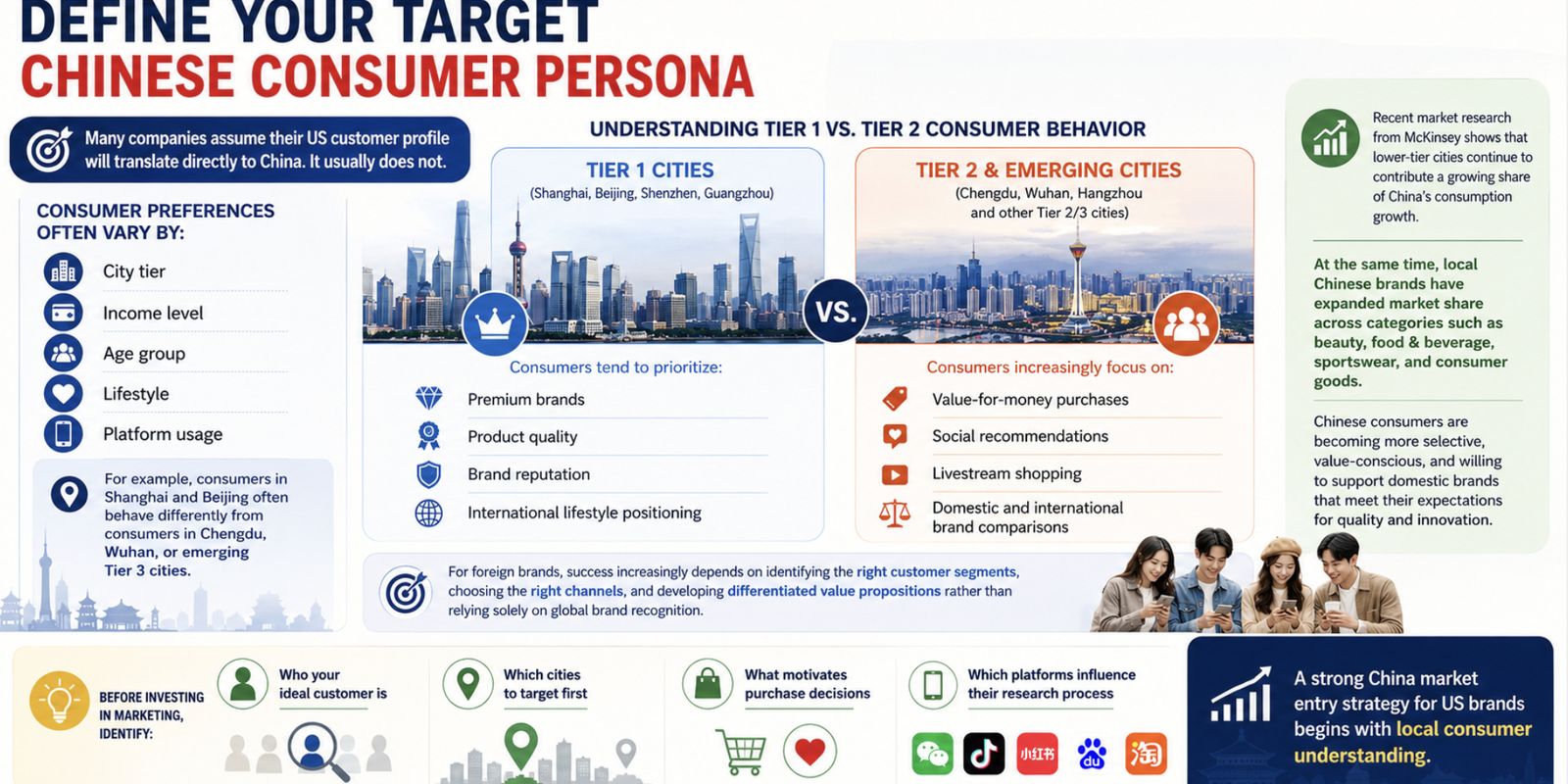
Many companies assume their US customer profile will translate directly to China.
It usually does not.
Consumer preferences often vary by:
- City tier
- Income level
- Age group
- Lifestyle
- Platform usage
For example, consumers in Shanghai and Beijing often behave differently from consumers in Chengdu, Wuhan, or emerging Tier 3 cities.
Understanding Tier 1 vs. Tier 2 Consumer Behavior
Recent consumer research shows that Tier 1 city consumers tend to prioritize:
- Premium brands
- Product quality
- Brand reputation
- International lifestyle positioning
Meanwhile, consumers in Tier 2 and emerging cities increasingly focus on:
- Value-for-money purchases
- Social recommendations
- Livestream shopping
- Domestic and international brand comparisons
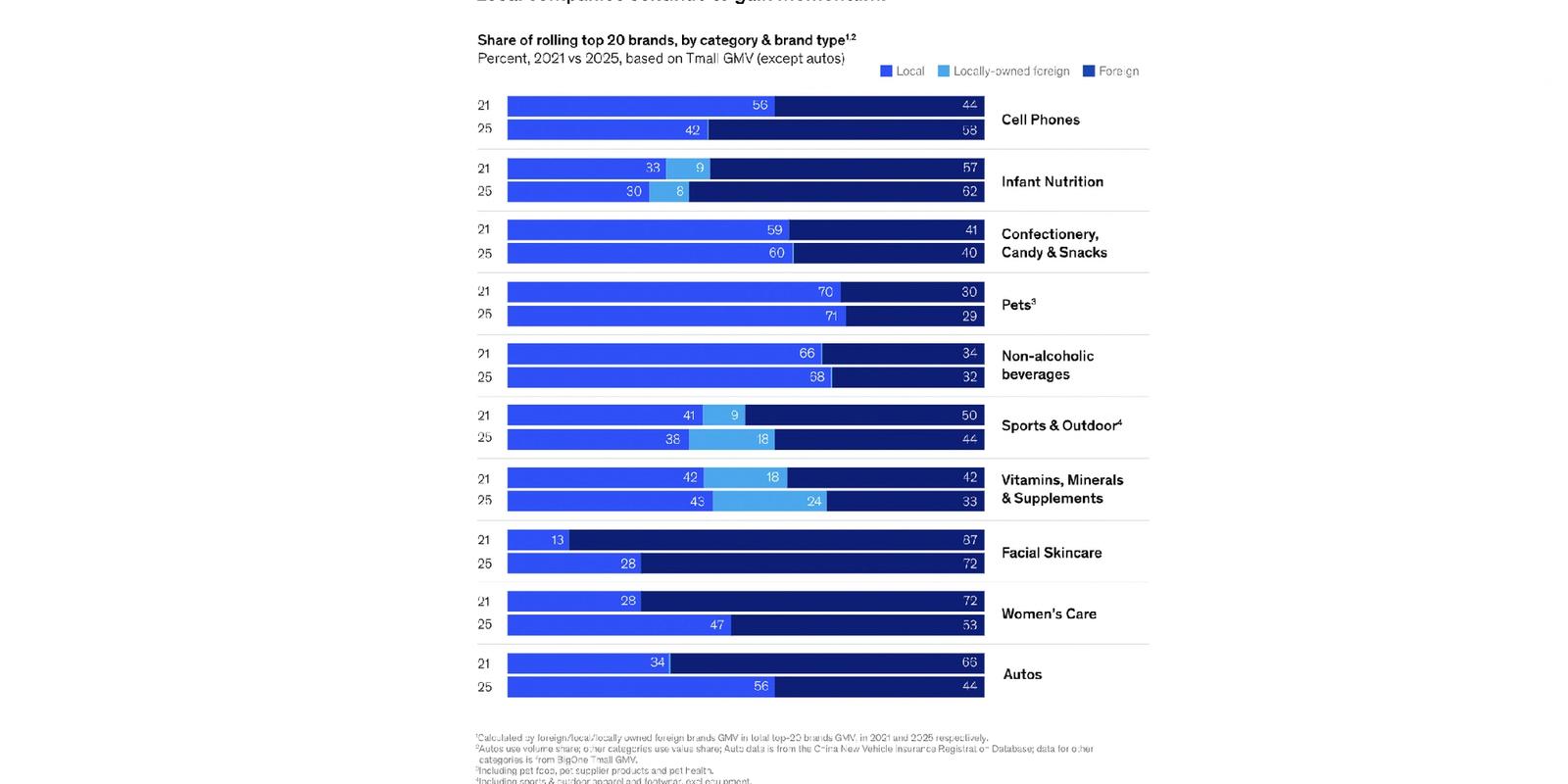
Recent market research from McKinsey shows that lower-tier cities continue to contribute a growing share of China's consumption growth. At the same time, local Chinese brands have expanded market share across categories such as beauty, food and beverage, sportswear, and consumer goods. Chinese consumers are becoming more selective, value-conscious, and willing to support domestic brands that meet their expectations for quality and innovation.
For foreign brands, success increasingly depends on identifying the right customer segments, choosing the right channels, and developing differentiated value propositions rather than relying solely on global brand recognition.
Before investing in marketing, identify:
- Who your ideal customer is
- Which cities to target first
- What motivates purchase decisions
- Which platforms influence their research process
A strong China market entry strategy for US brands begins with local consumer understanding.
2. Audit Your Brand Name for Chinese Phonetics and Meaning
Direct translation rarely works.
Chinese consumers often remember brands through their Chinese names rather than their English names.
A successful Chinese brand name should:
- Be easy to pronounce
- Sound similar to the original brand where possible
- Carry positive cultural associations
- Avoid unintended meanings
Examples include:
Coca-Cola (可口可乐)
The name sounds similar to "Coca-Cola" while translating roughly to "tasty and enjoyable," creating a positive and memorable brand association.
BMW (宝马)
BMW's Chinese name, 宝马 (Bao Ma), translates to "precious horse." In Chinese culture, horses symbolize strength, speed, endurance, and success. The name aligns closely with BMW's brand positioning around performance and driving excellence while creating positive local cultural associations.
This step should be included in every China brand localization checklist.
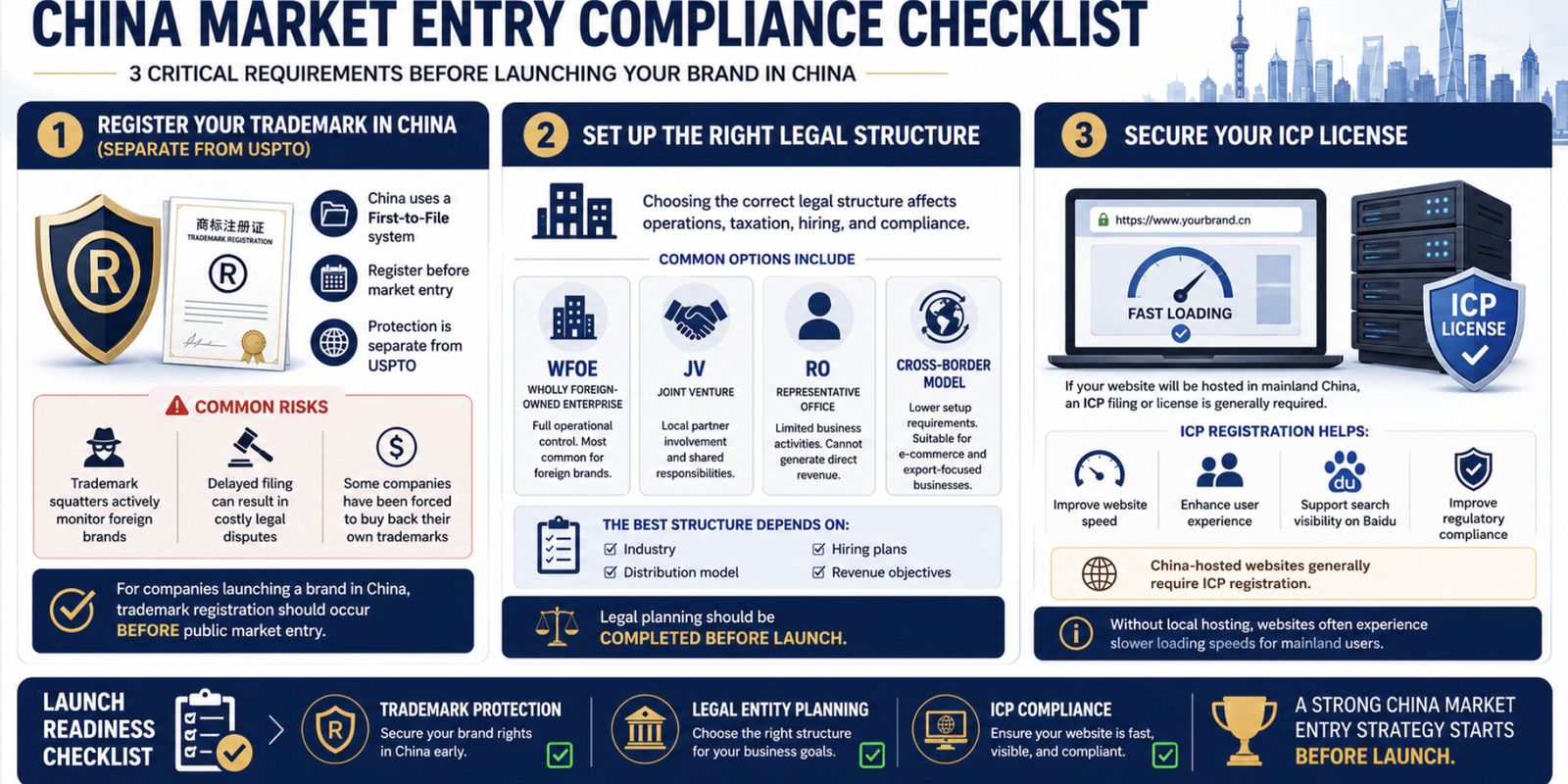
3. Register your trademark in China (separate from USPTO)
One of the most expensive mistakes foreign brands make is assuming US trademark protection extends to China.
It does not.
China follows a "first-to-file" trademark system, meaning the first party to register a trademark generally receives legal ownership rights.
This process is administered by the China National Intellectual Property Administration (CNIPA).
Why this matters
- Trademark squatters actively monitor foreign brands
- Delayed filing can result in costly legal disputes
- Some companies have been forced to buy back their own trademarks
For companies launching a brand in China, trademark registration should occur before public market entry.
4. Set Up the Right Legal Structure
Choosing the correct legal structure affects operations, taxation, hiring, and compliance.
Common options include:
- Wholly Foreign-Owned Enterprise (WFOE)
- Joint Venture (JV)
- Representative Office
- Cross-border business model
A WFOE is often preferred by foreign brands seeking greater operational control.
The best structure depends on:
- Industry
- Distribution model
- Hiring plans
- Revenue objectives
Legal planning should be completed before launch.
5. Secure Your ICP License
If your website will be hosted in mainland China, an ICP filing or license is generally required.
An ICP registration helps:
- Improve website speed
- Enhance user experience
- Support search visibility on Baidu
- Improve regulatory compliance
Without local hosting, websites often experience slower loading speeds for mainland users.
For brands planning long-term growth, ICP readiness should be part of the overall China market entry strategy for US brands.
6. Choose Your Primary Platforms Before Building Content
Many brands waste resources creating content before deciding where their audience actually spends time.
China's major platforms serve different purposes.
Best for:
- Customer retention
- CRM
- Loyalty programs
- Mini Programs
Douyin
Best for:
- Brand awareness
- Livestream commerce
- Product discovery
Xiaohongshu (RED)
Best for:
- Product reviews
- Lifestyle positioning
- Trust building
Baidu
Best for:
- Search visibility
- Lead generation
- High-intent traffic
The Most Effective Strategy Is Platform Integration
Successful brands rarely rely on a single platform.
A typical customer journey may look like this:
- Discover a product through a Douyin video
- Read reviews on Xiaohongshu
- Search the brand on Baidu
- Follow the brand on WeChat
- Purchase through a Mini Program or e-commerce platform
Combining platform operations, KOL campaigns, paid media, social content, and search visibility creates a more effective customer acquisition strategy than treating each platform independently.
7. Localize Your Website, Not Just Translate It
Translation changes language.
Localization changes customer experience.
Effective website localization includes:
- Chinese messaging
- Local keyword optimization
- Mobile-first design
- Local payment methods
- Customer support expectations
- Cultural adaptation
Many US brands mistakenly publish machine-translated content that fails to resonate with Chinese consumers.
A strong China brand localization checklist should include both linguistic and cultural adaptation.
8. Develop Your KOL Strategy Before Launch
Influencer marketing is deeply integrated into China's consumer journey.
Chinese consumers often discover and validate brands through:
- KOLs (Key Opinion Leaders)
- KOCs (Key Opinion Consumers)
- Livestream creators
- Community recommendations
The most effective partnerships are aligned with:
- Target audience demographics
- Product category
- Platform behavior
Successful influencer campaigns require planning before product launch rather than after.
Many consumers trust creator recommendations and peer reviews more than traditional advertising, particularly in categories such as beauty, fashion, wellness, travel, and lifestyle.
9. Set Up Chinese Customer Service Channels
Customer service expectations in China are often faster than in Western markets.
Consumers expect:
- Quick response times
- Real-time communication
- Mobile-based support
Common service channels include:
- WeChat customer service
- Platform messaging
- Live chat
- Customer communities
Fast response times directly influence trust and conversion rates.
AI Is Becoming a Core Customer Service Tool
China's rapid adoption of AI is reshaping customer service operations.
According to CNNIC, more than 602 million Chinese users had adopted generative AI tools by the end of 2025, making AI-powered interactions increasingly familiar to consumers.
Many brands now deploy:
- AI chatbots on social platform
- Automated customer service agents
- AI-powered FAQ systems
- Intelligent product recommendation engines
These tools help brands:
- Reduce response times
- Improve service consistency
- Support 24/7 customer engagement
- Scale customer support efficiently
For brands entering China, AI-powered customer service can provide a competitive advantage while controlling operational costs.
10. Plan a Phased Entry Strategy
Launching nationwide on day one is rarely necessary.
A phased approach typically reduces risk.
Soft Launch
Objectives:
- Validate demand
- Test messaging
- Gather customer feedback
- Optimize operations
Full Launch
Objectives:
- Scale awareness
- Expand distribution
- Increase customer acquisition
Many successful brands start with one city, one platform, or one customer segment before expanding.
This approach creates a more sustainable path for launching a brand in China.
Example: Lululemon's Expansion Through Community Building
Lululemon provides another strong example of successful launching a brand in China.
Instead of relying solely on traditional advertising, the company invested heavily in:
- Local fitness communities
- Yoga and wellness events
- KOL and fitness ambassador partnerships
- Xiaohongshu content
- Premium lifestyle positioning
By combining digital engagement with offline community experiences, Lululemon has achieved strong growth in China and made the market one of its fastest-growing regions globally.
The company's approach highlights the importance of cultural relevance, community engagement, and localized brand building rather than simply importing a Western marketing model.
Final Thoughts
China remains one of the world's most important growth markets, but success requires preparation.
A successful China market entry strategy for US brands requires:
- Deep consumer understanding
- Trademark protection
- Chinese brand localization
- ICP and website planning
- Platform-specific marketing
- KOL and content strategies
- Customer service infrastructure
- Phased market entry execution
Companies that invest in preparation before launch are better positioned to build trust, reduce risk, and achieve sustainable growth in China's increasingly competitive market.
Ready to Expand into China?
Whether you're exploring how to enter Chinese market opportunities for the first time or refining your existing expansion plan, China Digital Dynamics helps international brands navigate every stage of market entry.
From market research and localization to digital strategy, platform operations, influencer marketing, and performance optimization, our team supports sustainable growth in China's evolving digital landscape.
Download the Free China Market Entry Checklist
Get a practical checklist covering all ten launch requirements to help your team prepare for a successful China expansion.
Book a Strategy Consultation
Speak with our China market specialists to evaluate your market readiness and build a customized launch plan.