'/%3e%3cpath%20d='M84%20126C60.804%20126%2042%20107.196%2042%2084C42%2060.804%2060.8041%2042%2084%2042L84%20126Z'%20fill='%235546FA'/%3e%3c/svg%3e)
Baidu China SEO Guide: How to Rank on the Largest Search Engine
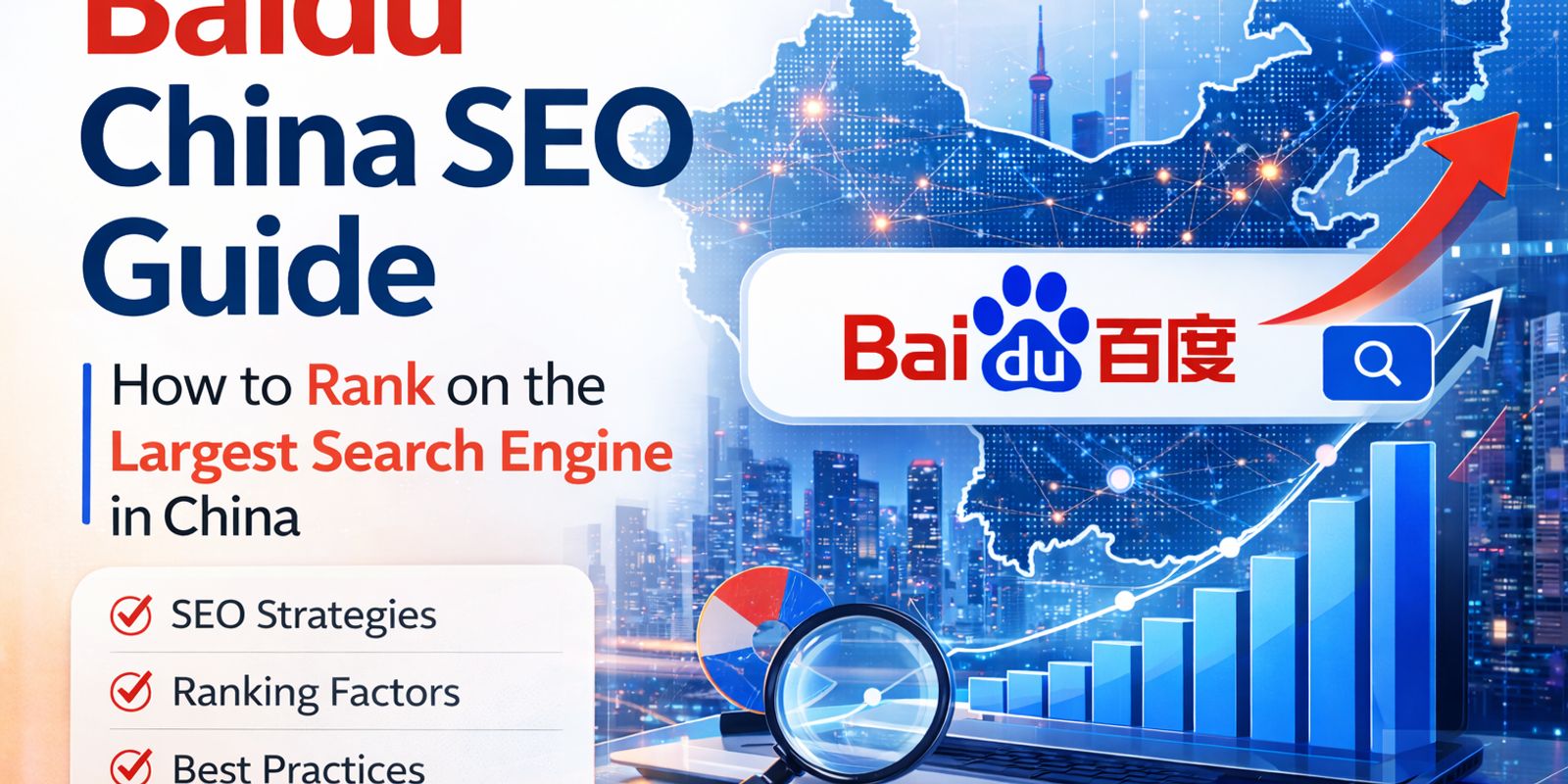
For brands entering the Chinese digital market, understanding how to do SEO for Baidu is essential. While many search engine optimization principles overlap with Google, Baidu operates with different algorithms, technical requirements, and user behavior.
Baidu remains the dominant search engine in mainland China, serving hundreds of millions of users and processing billions of searches daily. As China’s digital ecosystem continues to expand, appearing in Baidu search results is critical for brands seeking visibility among Chinese consumers.
This guide explains Baidu search engine optimization, key ranking factors, and proven strategies that show marketers how to do SEO on Baidu effectively.
Understanding Baidu’s Role in the Chinese Search Ecosystem
Baidu is often referred to as the “Google of China,” but its ecosystem extends far beyond traditional web search. The platform integrates a wide range of services that frequently appear directly within search results.
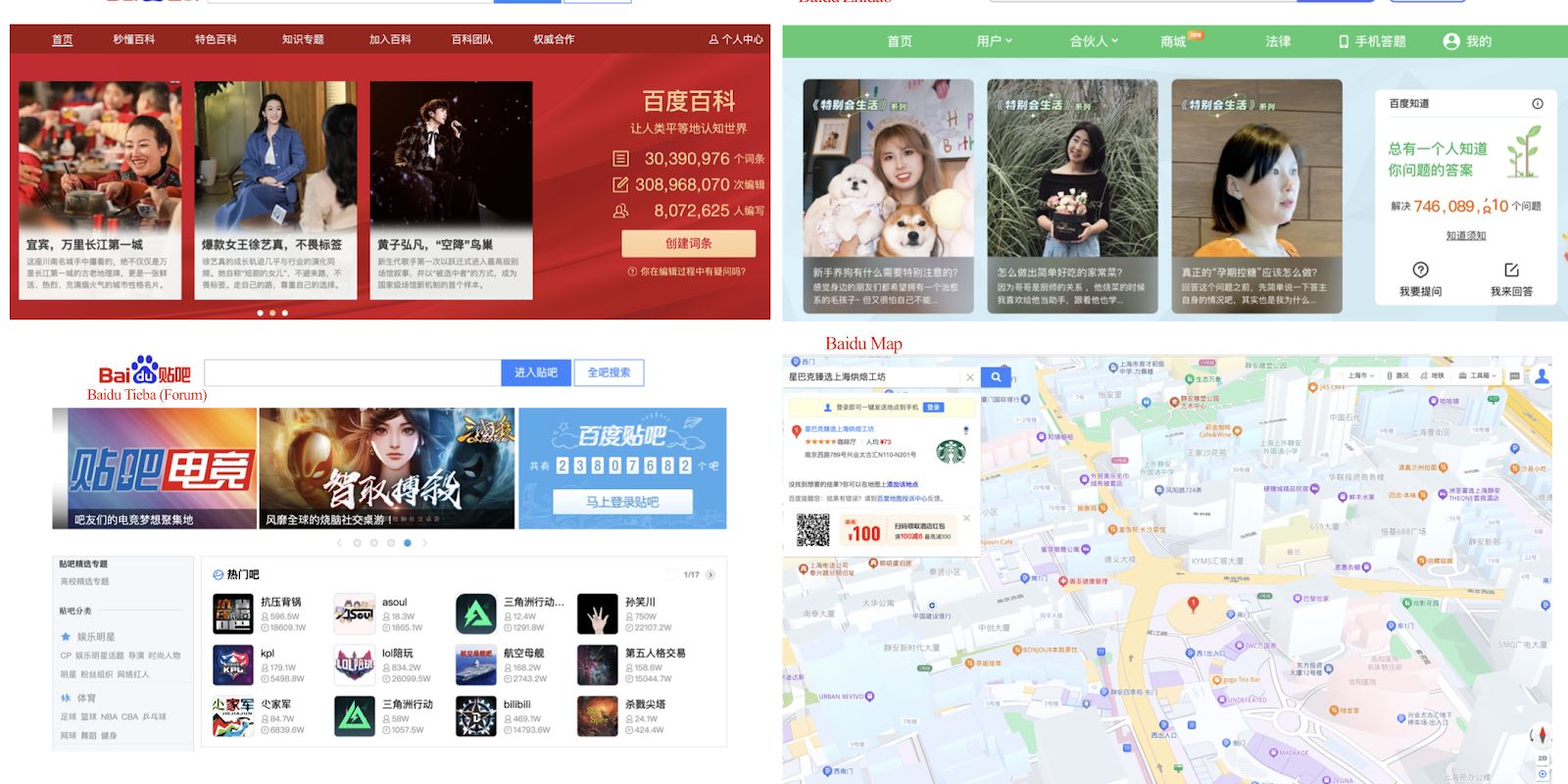
Some of the most influential Baidu platforms include:
- Baidu Baike— a Chinese online encyclopedia similar to Wikipedia
- Baidu Zhidao— a popular question-and-answer platform
- Baidu Tieba — community discussion forums organized by topic
- Baidu Maps — one of China’s most widely used navigation platforms
Because Baidu often prioritizes its own ecosystem within search results, effective Baidu SEO typically involves optimizing not only your website but also content across these Baidu-owned platforms.
For international brands targeting Chinese audiences, Baidu search engine optimization plays a critical role in:
- Market entry and brand discovery
- Chinese-language search visibility
- Lead generation and e-commerce traffic
- Long-term digital brand credibility
Understanding how Baidu ranks content is the foundation of any successful China SEO strategy.
Key Differences Between Google SEO and Baidu SEO
Although both search engines rely on algorithms to determine rankings, Baidu operates differently in several important ways.
Language and Localization
Baidu strongly prioritizes Simplified Chinese content. Websites written in Chinese—especially those using localized keywords—tend to rank significantly higher.
English-language pages rarely perform well unless they are fully translated and localized. Effective Baidu SEO therefore requires native-language content and culturally relevant messaging.
Meta Tags Still Matter
Baidu still considers meta keywords as a ranking signal.
Optimizing title tags, meta descriptions, and keyword tags remains an important part of Baidu SEO. While keyword stuffing should still be avoided, including relevant keywords in metadata helps Baidu better understand page relevance.
Domain and Hosting Preferences
Websites hosted in mainland China or nearby regions generally load faster and perform better in Baidu rankings.
Using a .cn domain or China-friendly hosting infrastructure can improve both site performance and credibility in Baidu’s algorithm.
Internal Linking Importance
Baidu relies heavily on internal linking to understand website structure and page relevance.
Clear hierarchies, breadcrumb navigation, and keyword-rich anchor text can significantly improve crawling and indexation.
Step-by-Step Guide: How to Do SEO on Baidu
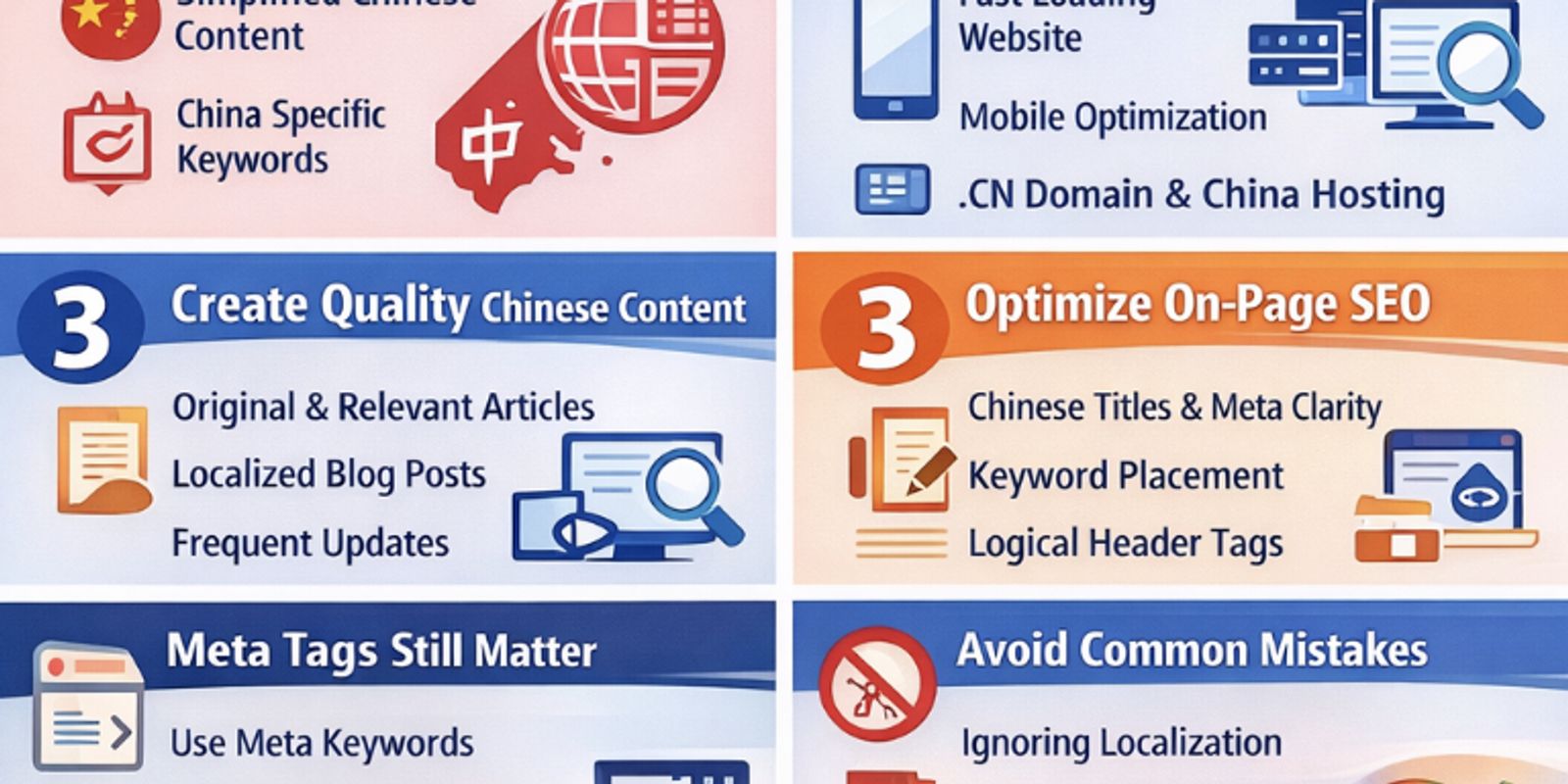
For marketers researching how to do SEO on Baidu, success typically depends on four pillars: localization, technical infrastructure, content strategy, and authority building.
1. Localize Your Website for Chinese Search
Localization goes far beyond translation. It includes:
- Simplified Chinese content
- Chinese keyword research
- Local cultural references
- China-friendly UX and design
Because Baidu prioritizes localized pages, many international brands create dedicated Chinese websites or landing pages specifically designed for Chinese audiences.
Recommended best practices include:
- working with native Chinese copywriters
- adapting product descriptions for local markets
- avoiding automatic translation tools
High-quality localization improves both search relevance and user engagement.
2. Optimize Technical Infrastructure
Technical performance plays a major role in baidu search engine optimization.
Fast Page Load Speed
Page speed is critical because slow-loading websites reduce both rankings and user engagement.
Brands targeting Chinese audiences should consider:
- China-optimized CDNs
- lightweight HTML structures
- mobile-friendly layouts
Hosting websites closer to mainland China often improves loading times significantly.
Mobile Optimization
China is one of the most mobile-first digital markets in the world. As a result, Baidu heavily prioritizes mobile usability.
Mobile optimization improves:
- user experience
- engagement metrics
- search rankings
Responsive design and fast mobile performance are essential.
Clear Site Architecture
Baidu’s crawler works best with simple website structures.
Effective site architecture includes:
- shallow page hierarchies
- strong internal linking
- accessible HTML navigation
Heavy JavaScript frameworks can sometimes prevent Baidu from crawling content effectively, so simpler HTML-based pages are often recommended.
3. Build High-Quality Chinese Content
Content remains the foundation of baidu seo optimization.
Baidu rewards:
- original content
- relevant topic coverage
- frequently updated pages
Fresh content is particularly important because Baidu tends to prioritize recently updated material in search results.
Recommended Content Formats
- Successful Baidu SEO strategies often include:
- long-form guides
- product comparison articles
- industry insights
- localized blog posts
Content that answers user questions clearly tends to perform best.
4. Optimize On-Page SEO Elements
On-page optimization remains one of the most controllable ranking factors when learning how to optimize for Baidu.
Important elements include:
Title Tags
Include the primary keyword near the beginning of the title.
Example:How to Do SEO for Baidu: A Complete China SEO Guide
Meta Descriptions
Write concise Chinese summaries that encourage users to click.
Header Structure
Use clear H1–H3 headings to structure content logically.
Keyword Placement
Place target keywords naturally within:
- titles
- headings
- opening paragraphs
- image alt text
Avoid keyword stuffing, which can trigger ranking penalties.
5. Build Authority Through Backlinks and Chinese Platforms
Backlinks still influence Baidu rankings, although they function differently compared with Google.
Baidu tends to value link quantity and Chinese-language relevance.
Effective link-building sources include:
- Chinese media websites
- industry blogs
- Baidu Tieba communities
- local Chinese directories
Another powerful strategy involves publishing content on Baidu-owned platforms, such as:
These platforms often receive preferential visibility within Baidu’s search results.
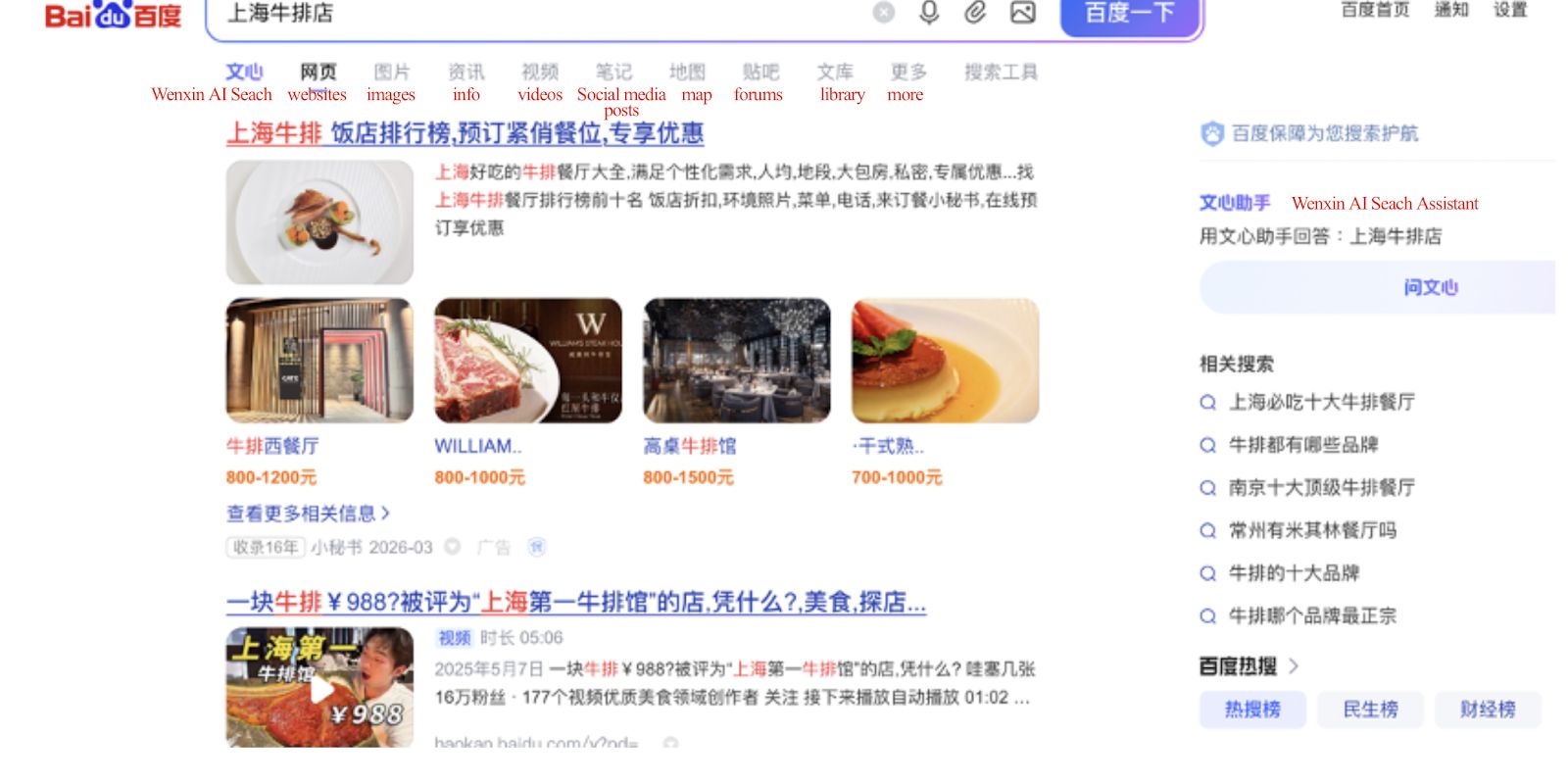
The Rise of AI Search: Baidu Wenxin and the Future of SEO
Artificial intelligence is transforming how search works in China. Baidu has integrated its ERNIE (Wenxin Yiyan) large language model into its search engine, introducing a new generation of AI-powered search experiences.
Instead of simply displaying a list of webpages, Baidu’s AI search can now:
- summarize answers from multiple sources
- respond to complex natural-language questions
- provide intelligent recommendations
- generate structured responses directly in search results
This reflects a broader shift toward AI-driven search engines that function as knowledge assistants rather than simple indexing systems.
The Wenxin model supports features such as:
- conversational search
- content summarization
- multimodal search using text, voice, and images
- AI-generated insights and recommendations
For marketers, this means Baidu SEO is evolving beyond traditional keyword rankings.
High-quality, authoritative content is increasingly likely to be summarized or referenced in AI-generated responses. Businesses must therefore focus on building topic authority, structured information, and credible content sources.
Companies that optimize for AI-powered search will be better positioned to appear in Baidu’s next-generation search results.
Common Baidu SEO Mistakes to Avoid
Many international brands struggle with Baidu SEO because they apply Google SEO tactics without adapting them to China’s digital ecosystem.
Common mistakes include:
- ignoring Chinese localization
- relying heavily on JavaScript-based websites
- poor internal linking structures
- slow loading speeds due to overseas hosting
Avoiding these issues significantly improves the chances of ranking successfully.
Future Trends in Baidu Search Optimization
Baidu’s search ecosystem continues to evolve as artificial intelligence becomes more deeply integrated into search technology.
Key emerging trends include:
- AI-powered search results
- rapid growth in voice search
- image and visual search adoption
- smarter content recommendation systems
Mobile search already dominates China’s digital landscape, accounting for the majority of search traffic.
As these technologies advance, content relevance and user experience will become even more important ranking signals.
Final Thoughts: Building a Winning Baidu SEO Strategy
For companies entering China’s digital market, mastering how to do SEO for Baidu is essential for achieving long-term online visibility.
A successful strategy combines:
- Chinese-language content
- strong technical infrastructure
- localized keyword research
- credible backlinks within China
- consistent content updates
As Baidu continues to integrate artificial intelligence through its Wenxin ecosystem, baidu search engine optimization is evolving toward AI-driven discovery and knowledge-based search.
Brands that invest in localization, technical performance, and authoritative Chinese content will be best positioned to succeed in Baidu search rankings—and reach one of the world’s largest online audiences.
Since 2015, China Dynamic has helped international brands navigate China’s digital ecosystem through data-driven marketing strategies, providing expertise in Baidu SEO, social media marketing, and digital growth across the Chinese market.